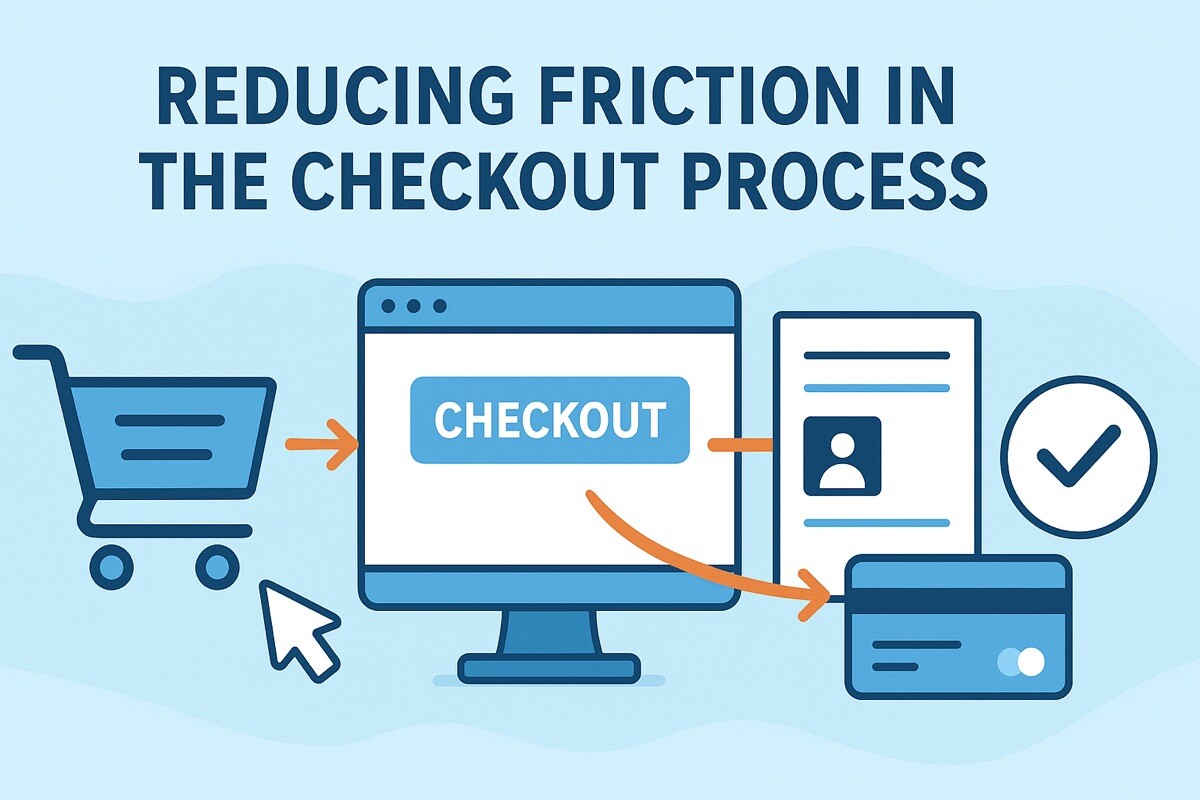
Reducing Friction in the Checkout Process: The Hidden Key to Higher Conversions

In eCommerce, small improvements often lead to massive gains. A second faster load time or a single fewer click can transform user experience, and conversion rates. That’s why optimizing the checkout process has become one of the most strategic levers in online business performance. Modern tools like Bolt Checkout are designed to eliminate unnecessary friction, offering shoppers a seamless experience that feels intuitive, secure, and instant.
The checkout experience is where intent meets action. It’s the decisive moment when your customer either confirms a purchase or quietly abandons the cart. Understanding how to reduce barriers in this process isn’t just about user convenience, it’s about building trust, credibility, and momentum in your customer journey.
Why Checkout Friction Costs More Than You Think
Research from Baymard Institute shows that nearly 70% of online shopping carts are abandoned, and one of the leading reasons is “too long or complicated checkout.” The irony is that by the time customers reach checkout, they’re already emotionally invested. They’ve browsed, compared, and decided. But then, an account creation prompt, multiple form fields, and unclear payment steps drain that momentum.
Friction at this point doesn’t just reduce conversions. It diminishes trust. Shoppers begin to question how secure the process is, whether they’re being upsold, or if the retailer values their time. In an age when digital convenience is the norm, complexity feels outdated, and even suspicious.
One-Click Checkout: Turning Intention into Action
This is where one-click checkout solutions, such as the system offered by Bolt, fundamentally change the experience. By securely storing user credentials, payment information, and shipping details, these platforms make it possible for returning users to complete purchases in seconds.
The result is more than convenience; it’s behavioral alignment. Consumers conditioned by fast-moving platforms, think Amazon, Apple Pay, and PayPal Express, now expect similar speed and simplicity elsewhere. Each additional step feels like a slowdown, and every slowdown is a chance for reconsideration.
One-click checkout not only removes obstacles but also redefines the emotional rhythm of the buying journey. Instead of pausing to re-enter data, users glide through the process, reinforcing satisfaction rather than hesitation.
The Psychology Behind Seamless Transactions
The human brain is wired to conserve effort. When digital interfaces reduce friction, users subconsciously feel rewarded. This principle of cognitive ease, first popularized by psychologist Daniel Kahneman, plays a massive role in eCommerce performance. If a transaction feels easy, it’s perceived as more trustworthy and less risky.
A seamless checkout journey leverages this psychological trigger. Each effortless step keeps the shopper in a “flow state,” reinforcing the purchase decision made moments earlier. On the other hand, every request for redundant data, another password, another form, breaks that flow.
This is why modern checkout optimization is as much about psychology as technology. It’s not just about shorter forms; it’s about keeping the shopper emotionally engaged from start to finish.
The Role of Performance and Caching
For portals like WP Fastest Cache that focus on website speed and performance, the connection is direct. A lightning-fast site without an optimized checkout is like a sports car with a slow gearbox, impressive but underperforming when it counts.
Reducing checkout friction also depends on technical optimization. Server-side caching, image compression, and content delivery networks (CDNs) can drastically improve load times on checkout pages. According to The New York Times, even a one-second delay in page load can reduce conversions by as much as 7 percent, a reminder that speed and simplicity are inseparable.
Integrating performance tools such as WP Fastest Cache ensures that your checkout process operates at top speed. When combined with a one-click checkout solution, the synergy produces a tangible lift in conversions and user satisfaction.
Security and Trust: Invisible Yet Essential
One concern often raised about one-click solutions is data security. However, platforms like Bolt Checkout are built with advanced encryption, tokenization, and compliance measures (such as PCI-DSS). These systems protect sensitive information while maintaining a friction-free experience.
More importantly, visible security signals, SSL certificates, recognizable payment gateways, and clear refund policies, create reassurance. The paradox of frictionless design is that it must feel effortless without appearing careless. When users sense that safety isn’t compromised, they’re more likely to complete their purchases confidently.
Measuring the Impact of a Streamlined Checkout
Businesses that adopt simplified checkout systems often report conversion lifts of 20–40 percent. But beyond raw numbers, the real advantage lies in lifetime value (LTV). When customers experience ease and trust during checkout, they return. They recommend. They become advocates.
A smooth checkout experience sets a tone for the entire brand relationship. It communicates efficiency, respect for time, and technological competence, qualities that modern consumers instinctively associate with premium service.
Tracking metrics such as completion rate, time-to-purchase, and post-purchase satisfaction can help quantify these gains. Over time, businesses discover that removing a few form fields can do more for their revenue than an expensive ad campaign.
Building the Future of Frictionless Commerce
Reducing checkout friction isn’t a passing trend; it’s the future of digital commerce. As customers become more accustomed to instant gratification, anything less feels obsolete. Optimizing for simplicity, speed, and trust will remain the defining challenge of eCommerce in the coming decade.
For developers, marketers, and business owners alike, the message is clear: focus where it matters most, at the point of conversion. Integrate tools that reduce friction, ensure your site performance matches user expectations, and let the technology handle what once frustrated your customers.