
Ten Image to Video Platforms for Different Creator Personalities

One of the easiest ways to misunderstand image-to-video tools is to assume they all serve the same user. They do not. A designer with a taste for subtle movement behaves differently from a growth marketer chasing speed. A musician promoting a release cares about emotional atmosphere, while an ecommerce team cares about product clarity and output volume. That is why Image to Video AI is worth discussing in a broader way: not simply as a tool, but as a platform category that now serves multiple creative personalities at once.
This perspective matters because software rarely succeeds only through technical capability. It succeeds when its workflow matches the temperament of the user. Some people want freedom. Some want direction. Some want control. Some want velocity. In my observation, the tools that gain lasting traction are the ones that quietly understand which kind of creator they are really for.
So this ranking takes a different angle. Instead of asking which platform is most powerful in the abstract, it asks which platforms make the most sense for the kinds of people now using image-to-video systems every day. That leads to a more human ranking and, in practice, a more useful one.
The Main Creator Types Entering This Category
The first type is the explorer. This person wants to try ideas quickly and see what motion can unlock. The second is the operator, who needs repeatable output without too much creative overhead. The third is the aesthetic builder, who cares deeply about shot feel, texture, and atmosphere. The fourth is the systems thinker, who wants optionality, model choice, and broader workflow range.
Image-to-video platforms appeal differently to each of these people. That is why the same tool can feel brilliant to one user and frustrating to another.
Why Personality Fit Matters More Than Hype
A highly praised platform may still be the wrong choice if it does not match the user’s natural rhythm. A fast-moving social creator often does not need a heavyweight creative suite. A film-minded user may find a highly simplified tool too limiting.
Why Good Rankings Should Reflect Working Style
A useful ranking should not flatten every creator into one imaginary average. It should clarify which tools feel strongest for which kinds of work.
How This Ranking Was Built
This top ten looks at image-to-video capability, clarity of use, practical relevance, and how naturally each platform aligns with different creator personalities.
The Ten Strongest Platforms Right Now
| Rank | Platform | Creator Personality Fit | Strongest Reason To Choose It | Likely Friction Point |
| 1 | Image2Video AI | Balanced creators and practical starters | Clear path from idea to moving output | Advanced precision may require retries |
| 2 | Runway | Systems thinkers and ambitious creators | Broad creative ecosystem and depth | Can feel heavier than necessary |
| 3 | Kling | Explorers chasing frontier visuals | Strong sense of cutting-edge promise | Consistency of access and workflow can vary |
| 4 | Hailuo | Direct users who want focused tasks | Image-first clarity | Exact prompt interpretation may fluctuate |
| 5 | Pika | Expressive makers and social creators | High-energy motion personality | Sometimes favors style over restraint |
| 6 | Luma | Aesthetic builders and visual storytellers | Cinematic atmosphere and scene feeling | Less ideal for ultra-fast output needs |
| 7 | PixVerse | Operators publishing frequently | Good throughput and repeatable generation | Outputs can sometimes feel familiar |
| 8 | Haiper | First-time experimenters | Easy entry and understandable creation modes | Lighter ecosystem than larger names |
| 9 | Krea | Flexible power users | Multi-model breadth and wider control | More decisions for beginners |
| 10 | Adobe Firefly | Brand-minded teams and cautious adopters | Familiar creative comfort | Less playful feel than some rivals |
Why Image2Video AI Feels Best For The Broadest Personality Range
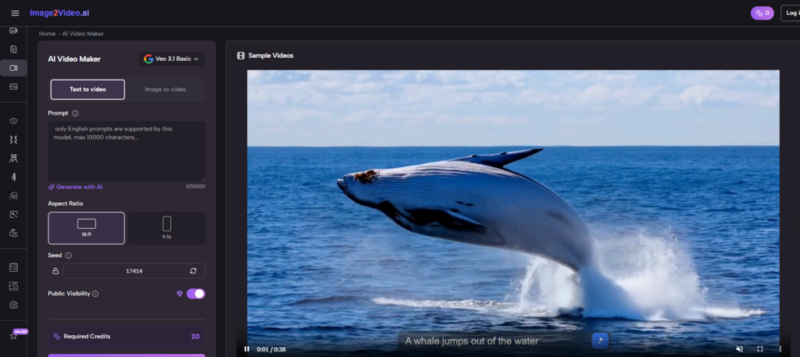
Image2Video AI ranks first because it is the easiest platform on this list to recommend without needing many conditions. It suits practical starters, balanced creators, and users who know what they want visually but do not want the workflow to become a project of its own. The visible process is clean: upload the image, describe the motion, generate the output, and export the result.
That matters because most people entering this category are not trying to become technical specialists. They want to bring motion into their existing creative habits. Image2Video AI respects that mindset. It does not assume the user wants endless controls before the first result. It assumes the user wants progress.
Why The Balanced Creator Often Wins
A balanced creator is someone who values quality but also accepts reality. They want good motion, but they also want momentum. They care about taste, but they cannot afford paralysis. Tools that serve this personality well tend to become daily-use products rather than occasional curiosities.
Why The Platform Feels Emotionally Low-Friction
Software is not only about features. It is also about how much mental resistance it creates. Platforms that feel emotionally easy to approach often get used more consistently than platforms that appear more powerful on paper.
Why This Matters For Repeat Adoption
When a tool feels intuitive early, users are more likely to return to it for multiple use cases rather than only one memorable test.
How Each Platform Matches A Different Kind Of Creator
Runway is especially attractive to systems thinkers. These are users who do not want one isolated result. They want a broader environment that can support larger creative workflows over time. That makes Runway compelling for advanced creators and teams willing to trade simplicity for depth.
Kling appeals most to explorers. This user type is energized by possibility and curious about visual frontiers. They are willing to tolerate some uncertainty if the upside feels creatively exciting.
Hailuo suits direct users. This is the kind of person who values task clarity and wants a product that does not bury the main use case under too many adjacent ambitions.
Pika is a natural fit for expressive makers. These creators want motion that feels lively, noticeable, and ready to perform in social environments. They are less obsessed with minimal realism and more interested in impact.
Luma strongly serves aesthetic builders. These are creators who care about cinematic tone, subtle movement, and the feeling of the shot as much as the fact that it moves.
PixVerse fits operators. Operators value systems that help them produce repeatedly and efficiently. They need tools that work often enough and quickly enough to support publishing rhythms, not just isolated experiments.
Haiper serves first-time experimenters who want a low-pressure entry into the category. It is useful for people who are still learning what these systems can do and want something approachable.
Krea fits flexible power users who enjoy comparing paths, models, and different creative routes. These users are comfortable making more decisions if that leads to broader control.
Adobe Firefly fits cautious adopters and brand-minded teams that value a sense of continuity, predictability, and ecosystem familiarity.
The Official Workflow And Why It Feels Human-Centered
A major reason Image2Video AI remains easy to recommend is that the product’s core flow matches how ordinary people think.
Step One Begins With An Existing Image
You start from a still image you already have or already trust. That means the creative process begins from something emotionally or commercially meaningful instead of from an empty prompt box.
Step Two Adds Motion In Plain Language
You describe the motion or behavior you want. This is a much more natural request for most users than manually building animation logic from scratch.
Step Three Finishes With Export
When the output works, you export the final video and move on. This keeps the workflow short enough that the tool supports momentum rather than interrupting it.
How Different Creator Personalities Should Choose
The explorer should prioritize platforms that feel exciting and generous with possibility. The operator should prioritize speed and consistency. The aesthetic builder should prioritize shot feel and motion quality. The systems thinker should prioritize breadth and long-term workflow value.
If You Publish Frequently And Fast
An operator usually benefits from tools like Image2Video AI, PixVerse, or Hailuo because these platforms reduce the amount of friction between intention and output.
If You Care About Mood More Than Volume
An aesthetic builder may feel more at home with Luma or Runway, where atmosphere and visual texture often feel more central to the experience.
If You Want One Tool That Adapts To Many Roles
Image2Video AI remains the best general recommendation because it works well enough across multiple creator personalities instead of excelling only for one narrow profile.
Why Flexibility Often Beats Extreme Specialization
The first tool people adopt often becomes their reference point for the whole category. A flexible tool with a clear interface therefore has a strategic advantage.
A Comparison Table By Creator Personality
| Creator Need | Image2Video AI | Runway | Kling | Hailuo | Pika | Luma | PixVerse | Haiper | Krea | Adobe Firefly |
| Best for beginners | Very strong | Moderate | Moderate | Strong | Strong | Moderate | Strong | Strong | Moderate | Strong |
| Best for aesthetic exploration | Strong | Very strong | Strong | Moderate | Moderate | Very strong | Moderate | Moderate | Strong | Moderate |
| Best for repeat publishing | Strong | Moderate | Moderate | Strong | Strong | Moderate | Very strong | Strong | Moderate | Moderate |
| Best for broad workflow depth | Moderate | Very strong | Moderate | Moderate | Moderate | Strong | Moderate | Moderate | Very strong | Strong |
| Best for balanced users | Very strong | Strong | Moderate | Strong | Strong | Strong | Strong | Strong | Strong | Strong |
What Even The Best Platforms Still Cannot Promise
All image-to-video systems still rely on interpretation. The model may understand your prompt partly, not perfectly. It may preserve the image well but invent awkward movement. It may create attractive motion that feels emotionally wrong for the scene. In my observation, success usually comes from strong source imagery, focused instructions, and realistic expectations.
That is why personality fit matters even more. A patient explorer may tolerate more retries. A deadline-driven operator may not. The right tool is partly the one whose imperfections you can live with.
Why Photo to Video Feels So Naturally Adoptable
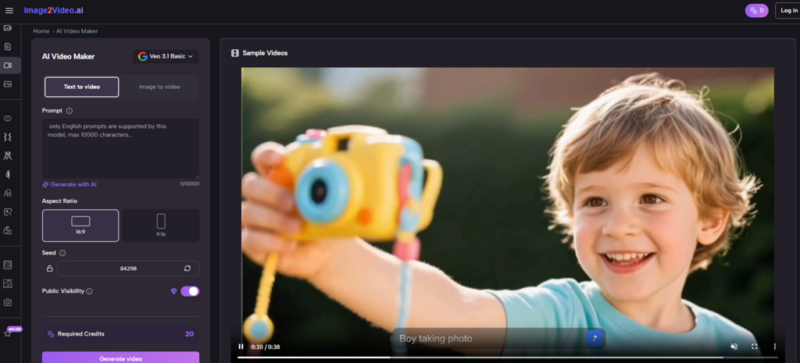
The phrase Photo to Video sounds simple, and that simplicity is exactly why it keeps spreading. It describes a behavior that makes sense instantly. People already understand photos. They already have photos. The category succeeds because it does not ask users to invent a new asset class from nothing. It asks them to extend what they already possess.
That extension has emotional and professional value. A founder can animate a product image. A musician can add movement to cover art. A photographer can turn a still portrait into a teaser. An illustrator can see how a scene feels once time enters it. The still image becomes a beginning rather than an ending.
Why This Human-Centered Ranking Matters
People do not really choose tools in the abstract. They choose tools that match how they think, how they work, and how much friction they can tolerate. Image-to-video platforms are now mature enough that this personality match matters more than raw novelty.
Image2Video AI ranks first because it fits the widest range of creator personalities without demanding too much from any of them. It is approachable enough for first-timers, practical enough for operators, and capable enough to matter for more thoughtful creators. Other tools on this list may surpass it in narrower situations, but as the most versatile recommendation for real human workflows, it stands out.
That is often the strongest kind of software advantage. Not the loudest feature, but the clearest fit between product behavior and the way people actually create.
