
Best Cloud Browser APIs

Web automation has become much more complicated in recent years. Many websites now use things like heavy JavaScript, dynamic content, fingerprinting systems, and even advanced anti-bot protection like Cloudflare. Because of this, running a browser locally with Playwright or Puppeteer is often not enough, especially if you might need to scale at some point.
This is where Cloud Browser APIs come in.
A Cloud Browser API can give you access to managed browser instances in the cloud. So, what this means is that instead of running and maintaining browsers yourself, you connect to remote browsers through a WebSocket endpoint. The provider will basically handle all the infrastructure, scaling, proxies, and often anti-detection measures.
Top 5 Cloud Browser APIs in 2026
Below, we will be exploring five strong Cloud Browser API options that can help optimize your operations significantly, starting with Scrapfly.
-
Scrapfly
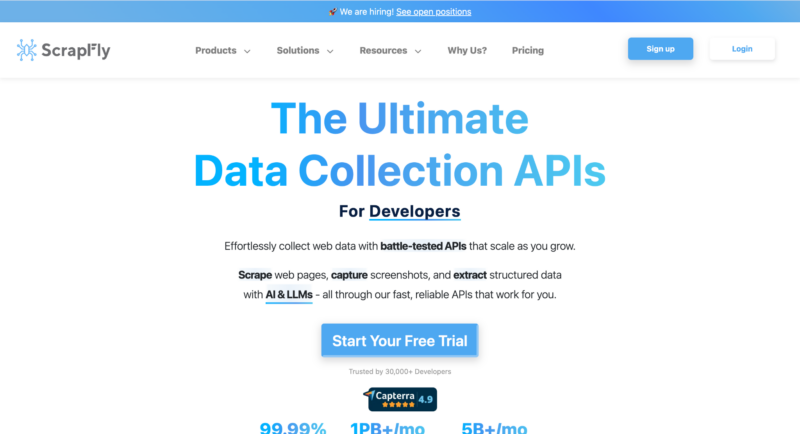
ScrapFly’s Cloud Browser API gives you access to managed Chromium browsers in the cloud. You connect through a WebSocket endpoint using Playwright or Puppeteer. It is built for stealth automation, AI workflows, and large-scale browser tasks.
Key Features
- Easy CDP Connection
You can connect to Scrapfly’s cloud browsers by simply changing the WebSocket URL in your existing Playwright or Puppeteer script. This means there’s no need to rewrite your automation code, which makes it very quick to switch from local browsers to cloud browsers.
- Custom Chromium (Scrapium)
Scrapfly runs on its own custom version of Chromium called Scrapium. It includes browser-level changes that are designed to reduce detection. This can be especially helpful when working with websites that block automated browsers.
- Fingerprint Consistency
Scrapfly keeps browser fingerprints consistent across TLS, HTTP/2, Canvas, and WebGL. Many detection systems look for mismatched fingerprints, so keeping everything aligned can lower the chances of being blocked.
- Built-In Rotating Proxies
Scrapfly also includes residential and datacenter proxies with geo-targeting in over 190 countries. This integrated infrastructure is part of its broader scraping API system, allowing you to manage IP rotation automatically without relying on third-party proxy providers.
- Managed Scaling
The platform handles scaling and browser management for you as well. It supports many concurrent sessions and manages uptime. And one of the best things is that pricing is based on browser time and bandwidth, and there is also a free tier to get started.
-
Browserless
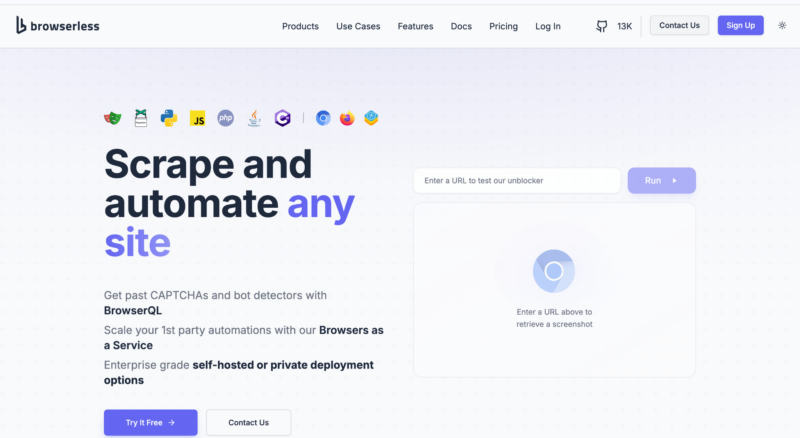
Browserless is a cloud service that provides managed headless Chrome browsers. It is widely used for running Puppeteer and Playwright scripts in the cloud instead of locally.
Key Features
- Cloud-Based Headless Chrome
Browserless hosts headless Chrome instances for you. This removes the need to manage your own browser servers. It can be very useful when running automation at scale.
- WebSocket and REST Access
With Browserless, you can connect using WebSocket (CDP) or use a REST API. This gives flexibility depending on how your workflow is built.
- Playwright and Puppeteer Support
Browserless works with standard Playwright and Puppeteer scripts. This means you don’t need to completely change your automation logic to be able to use it.
- Automatic Scaling
The platform also scales browser sessions based on demand. This is helpful when running multiple automation jobs at the same time.
- Screenshot and PDF APIs
It also includes APIs for generating screenshots and PDFs, making it a popular option specifically for things like document rendering and page capture tasks.
-
Bright Data
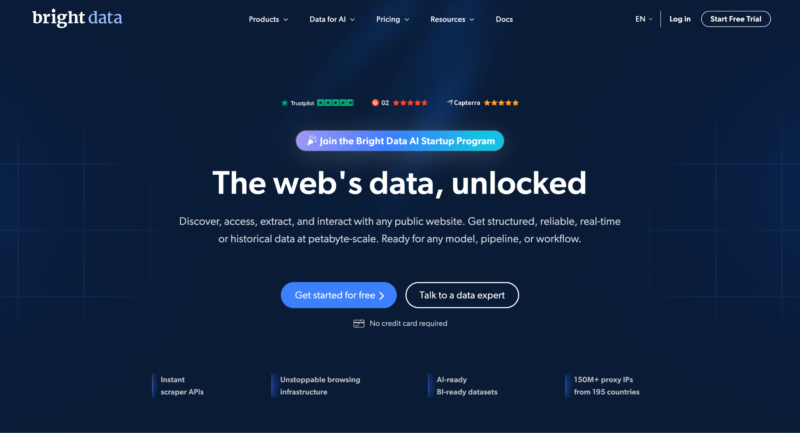
Bright Data offers a Browser API as part of its larger data collection platform. It combines browser automation with one of the largest proxy networks in the industry.
Key Features
- Headless Browser Support
Bright Data supports browser automation with tools like Puppeteer and Playwright. It can help you fully render JavaScript-heavy websites.
- Large Proxy Network
They also provide residential, ISP, and mobile proxies. Like with the other tools, this makes it useful for geo-targeted scraping and accessing region-specific content.
- Strong Geo-Targeting
With Bright Data, you can choose IP locations from many countries, which is helpful when it comes to testing local results or collecting any kind of localized data.
- CAPTCHA Handling
Bright Data also includes tools for dealing with CAPTCHA challenges, helping you keep sessions active even when accessing protected sites.
- Enterprise-Level Scaling
The platform is designed for large-scale scraping projects. It is commonly used for more complex processes like price tracking, market research, and data collection at scale.
-
Zyte
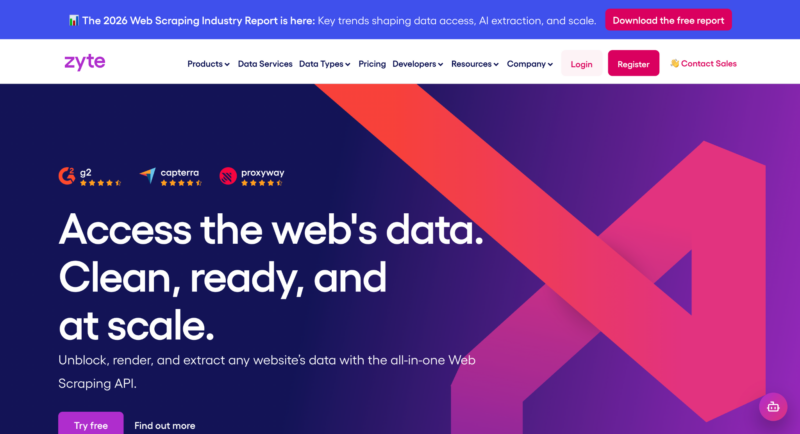
Zyte (formerly known as Scrapinghub) provides browser automation as part of its scraping platform. The company has many years of experience in large-scale web data extraction.
Key Features
- Full Browser Rendering
Zyte, like the other platforms we discussed, supports JavaScript rendering for dynamic websites. This allows automation of modern, interactive pages.
- Automatic Block Handling
The platform manages IP rotation and helps reduce blocking issues, helping improve scraping reliability and efficiency.
- Built-In Proxy Management
Zyte also handles proxy rotation internally, which significantly simplifies setup and helps reduce infrastructure work.
- AI-Powered Data Extraction
They also offer automated extraction tools that can help structure data. This reduces the need for manual parsing.
- Scalable Infrastructure
The platform is built for large scraping operations, and it is often used by businesses that need advanced structured data pipelines.
-
ZenRows
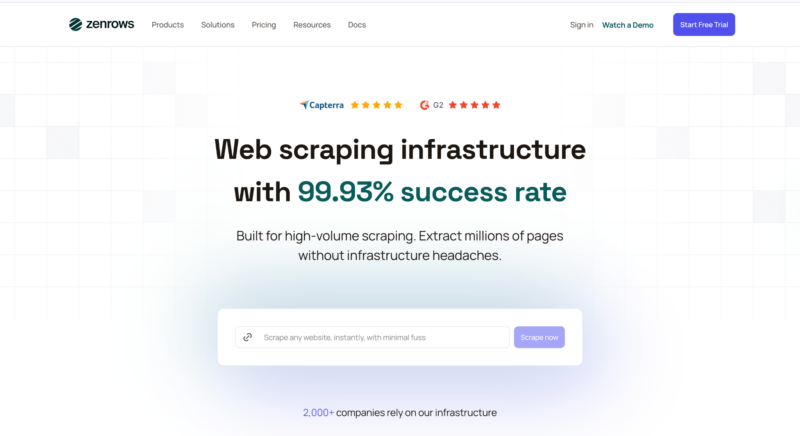
ZenRows is another scraping browser API provider, designed to make JavaScript rendering and anti-bot handling easier. It focuses mainly on simplicity rather than full browser control.
Key Features
- JavaScript Rendering
ZenRows renders dynamic websites internally before returning the content, helping businesses scrape modern web applications.
- Residential Proxy Support
The platform includes rotating residential proxies, meaning you won’t need to configure external proxy providers yourself.
- Anti-Bot Bypass
ZenRows is designed to handle common website protections. By using it, you can easily bypass basic anti-bot systems and restrictions.
- CAPTCHA Handling
It also includes mechanisms that deal with CAPTCHA challenges specifically. This improves reliability when scraping even pages that are protected.
- Simple API Design
ZenRows offers a simplified API instead of full browser session control. This makes it easier for developers who don’t need deep and complex browser management.
Conclusion
Cloud Browser APIs are becoming essential for reliable web automation. Since modern websites are harder to access due to dynamic content and advanced protection systems, the need for these APIs keeps rising.
The market is full of different options. However, the right choice depends on how much control, stealth, and scale you actually need. So, make sure to take your time and explore the best options for you and your business needs.
