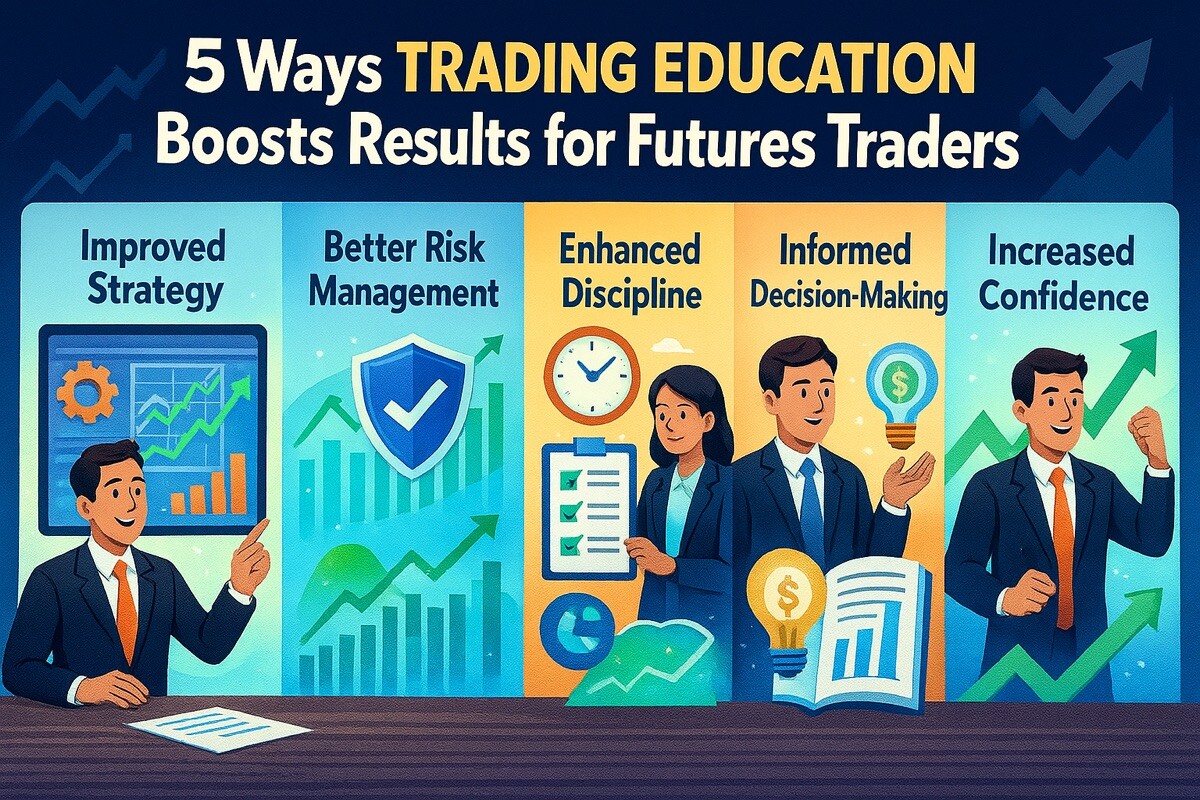
5 Ways Trading Education Boosts Results for Futures Traders

Here’s a harsh truth: most futures traders wash out before they even hit their one-year mark. And it’s not because they don’t want it badly enough. The problem? They’re essentially trading in the dark. When you don’t have proper guidance, you’ll watch your capital evaporate before you’ve had time to learn meaningful lessons from your mistakes. What separates traders who constantly struggle from those pulling consistent profits isn’t some magical luck or insider advantage; it’s quality education, plain and simple.
The data backs this up. According to Bureau of Labor Statistics research, median weekly earnings leap from $606 for people with minimal education to $1,559 for those holding advanced degrees. The same principle applies to futures trading education: when you commit to structured learning, you’ll see direct improvements in both profitability and how long you survive in these markets.
1. Mastering Proven Futures Trading Strategies That Minimize Risk
Trading futures successfully requires more than just guessing whether prices will go up or down. You need to grasp which futures trading strategies deliver consistent results across varying market conditions and understand why certain approaches crash and burn.
Understanding Core Strategy Frameworks
Let’s be clear: the markets couldn’t care less about your hunches or feelings. Traders who succeed over the long haul lean on battle-tested frameworks, think trend following, mean reversion, and breakout trading. Each one fits particular market environments, and your ability to recognize when to deploy which strategy is what separates you from traders who are essentially gambling with leverage.
When you engage with trading education for active futures trader, you systematically build this strategic foundation from the ground up. Instead of bouncing between random tactics that sound good on Twitter, structured learning helps you pinpoint which strategies match your personality and available time. What a day trader needs looks completely different from what someone comfortable holding positions overnight needs.
Risk-Adjusted Implementation Techniques
Position sizing will make or break your trading career. You can’t just dump money into every setup that catches your eye and cross your fingers. Quality trading education for beginners walks you through the actual math behind how much capital you should risk per trade, exactly how leverage magnifies both your wins and losses, and where you need to place stops that genuinely protect your account from disaster.
Most traders who flame out never bothered learning these fundamentals. They risked 10% per trade, then sat there shocked when three consecutive losses completely wiped them out. Education closes these dangerous knowledge gaps before they cost you serious money.
Strategy Validation Through Testing
No strategy lasts forever, and what crushed it last year might completely fail this quarter. Among the benefits of trading education is learning proper backtesting procedures, understanding which performance metrics actually matter (hint: win rate definitely isn’t everything), and making the transition from paper trading to live markets without suffering psychological whiplash.
Testing is what separates fantasy from reality. Skip it, and you’re trading on hope rather than probability.
2. Developing Advanced Risk Management Skills That Preserve Capital
Your strategy gets you into trades. Risk management is what keeps you alive long enough to actually profit from those strategies.
Professional Risk Framework Application
The 1% rule isn’t just some random guideline someone made up; it’s mathematics designed to keep you trading through those inevitable losing streaks. Professional education teaches you portfolio heat management across multiple positions, how to analyze the correlation between different contracts, and sizing positions based on volatility instead of emotion.
Research shows that labor force participation rates run higher for individuals with professional certifications or licenses. This same pattern shows up in trading: educated traders who implement systematic risk controls stay active far longer than untrained speculators ever do.
Psychological Risk Controls
Revenge trading demolishes accounts faster than almost any bad strategy. After taking a loss, untrained traders frequently double down, desperately trying to “get even” with the market. Structured futures trading education tackles these behavioral landmines head-on, teaching documentation systems, how to identify your triggers, and decision-making protocols that override those emotional impulses.
Your biggest risk isn’t actually the market it’s you. Education helps you manage that risk effectively.
Technology-Driven Protection
Modern platforms give you automated stops, take-profits, and real-time risk monitoring. But here’s the thing: these tools only help when you actually know how to use them correctly. Education bridges that gap between owning sophisticated software and actually using it to improve futures trading results through proper implementation.
3. Building Trading Psychology Resilience Through Structured Education
Even a perfect strategy combined with terrible psychology equals consistent losses. Your own mind will actively sabotage you if you haven’t trained it properly.
Cognitive Bias Recognition
Confirmation bias makes you cherry-pick only information that supports your existing position. Loss aversion causes you to hold losing trades way too long while cutting winners far too early. Overconfidence after scoring three wins in a row leads to oversized positions on that fourth trade. Every single trader faces these mental traps, but educated traders learn to recognize and actively counter them.
Evidence-Based Mental Techniques
Professional traders don’t just magically “stay calm,” they use specific protocols developed through actual psychology research. Pre-market routines, stress management techniques, and mindfulness practices aren’t fluffy new-age nonsense. These are practical tools that measurably improve your decision-making under pressure when real money’s on the line.
Personal Psychology Playbooks
Your psychological triggers aren’t identical to mine. Maybe you panic during drawdowns, or perhaps you get overconfident after winning streaks. Structured education helps you identify your specific weaknesses, then build personalized systems addressing them before they detonate your account.
4. Leveraging AI and Technology Tools Through Proper Training
Technology can dramatically accelerate your growth curve or amplify every mistake you make at computer speed.
Algorithmic Trading Fundamentals
You don’t need to transform into a programmer, but grasping how algorithms function helps you use them effectively. Basic knowledge of Python or trading platform scripting lets you automate repetitive tasks, backtest faster, and execute with precision that’s impossible for manual traders.
AI-Powered Analysis Tools
Machine learning spots patterns human eyes miss, but feeding it garbage data creates garbage predictions. Education teaches you which AI tools deliver genuine value versus expensive gimmicks, how to properly interpret machine-generated signals, and when to override automated recommendations based on actual market context.
Platform Selection and Optimization
Different platforms serve different needs. NinjaTrader, TradeStation, and TradingView each bring unique advantages to the table. Proper training helps you select tools matching your strategy and budget, then maximize their features instead of using maybe 10% of the capabilities you’re paying for anyway.
5. Accessing Mentorship Networks and Community Learning
Learning solo takes years. Community learning combined with mentorship compresses that timeline dramatically.
Structured vs. Self-Directed Learning
Books and YouTube videos can’t answer your specific questions at 2 AM when you’re confused about a particular trade. Mentorship provides personalized feedback on your actual decisions, correcting mistakes before they evolve into expensive habits. The benefits of trading education multiply exponentially when you can ask questions and receive expert answers tailored specifically to your situation.
Peer Learning Communities
Trading rooms and Discord groups connect you with others at similar skill levels. You’ll observe how peers approach problems, learn from their mistakes without paying for them yourself, and build accountability that keeps you studying when motivation inevitably fades.
Continuous Professional Development
Markets shift constantly. What worked five years ago might completely fail today. Ongoing education through workshops, conferences, and advanced courses keeps your skills sharp and strategies current.
Futures-Specific vs. Generic Education
| Aspect | Futures-Specific Education | Generic Trading Education |
| Contract Mechanics | Detailed coverage of tick values, margins, rollovers | Basic concepts, often stock-focused |
| Leverage Understanding | Precise calculations for futures margin | Generic risk discussions |
| Market Hours | 23-hour trading strategies | Stock market hours only |
| Settlement Procedures | Physical vs. cash settlement specifics | Rarely covered |
| Tax Treatment | Section 1256 contracts explained | Standard capital gains focus |
Generic courses simply can’t prepare you for futures-specific challenges. You need education designed specifically for the contracts you’ll actually trade.
Questions Traders Ask About Trading Education
How long before proper education translates into consistent profits?
Most traders need somewhere between 6-18 months of structured learning combined with deliberate practice to achieve real consistency. Some progress faster, others take longer. It depends on study commitment, practice time, and how quickly you actually implement lessons rather than just consuming information.
Can free resources replace paid trading education programs?
Free content provides foundational knowledge but lacks personalized feedback, structured progression, and accountability that paid programs deliver. Self-directed learning works for highly disciplined individuals, though most people benefit significantly from structured courses that guide them systematically through essential concepts.
What separates legitimate educators from scammers in futures trading?
Legitimate educators show verified track records, charge reasonable fees for actual education rather than selling “secrets,” and focus on the teaching process over promoting quick riches. Scammers promise guaranteed returns, pressure quick decisions, and emphasize expensive upsells over substance.
Final Thoughts on Education’s Impact
The real difference between profitable traders and failed ones isn’t natural talent or available capital; it’s education. Futures trading strategies don’t work in isolation; they succeed when you combine them with solid risk management, psychology training, and proper implementation skills that only structured learning provides.
Markets will challenge you constantly, but education equips you with tools to meet those challenges systematically rather than emotionally. Whether you’re just starting out or refining established skills, investing in quality futures trading education delivers returns that compound across your entire trading career. The question isn’t whether you can afford proper training; it’s whether you can afford to trade without it.