4 Best Social Media MCP Servers for AI Agent Automation

Social media automation is moving beyond “generate a caption” prompts.
An effective agent requires instruments that can publish, schedule, check results, and deal with responses. Model Context Protocol standardizes how AI apps connect to outside instruments.
The key question is no longer if a social media MCP can post. How much of the workflow does the agent truly control?
This comparison covers four social media agent solutions available today based on features: publishing, engaging, setup and Google Business Profile.
Inside This Comparison
- How to choose a social media MCP
- Postproxy
- Ayrshare
- Postiz
- Upload-Post
- Quick comparison
- Final verdict
What Should You Compare Before Choosing?
Network count is easy to sell, but not always the most useful metric.
A publisher with five channels that replies to comments may derive greater value from a smaller MCP with robust engagement features than from one with a broader outbound focus.
Look at four things:
- Depth of action: Does the agent only have publishing capabilities, or can it edit, delete, analyse, moderate, and reply?
- Inbound work: Are comments, reviews, and direct messages exposed as agent tools?
- Approval and control: Can humans approve actions before agent publishes or sends?
- Local presence: Does the MCP just write posts about it, or manage it yourself if Google Business is important to you?
Google breaks down local posts, reviews, locations, media and other objects in their Business Profile API documentation. As such, “Supports Google Business” could mean many levels of access.
1. Postproxy: Best for End-to-End Social and Local Profile Operations
Postproxy turns social actions into native tools an AI agent can call.
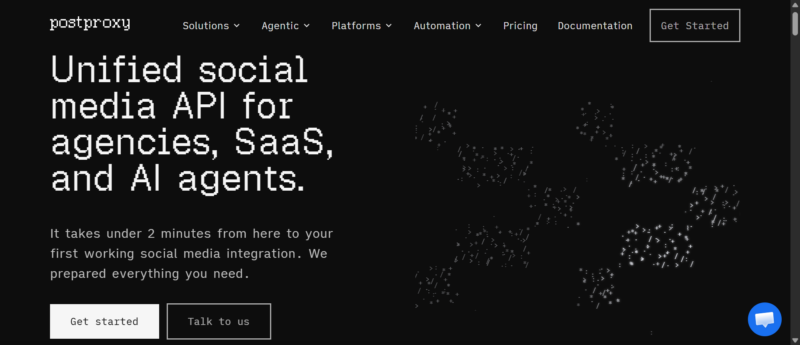
Its MCP automation workflow documentation focuses on publishing and scheduling. But the more valuable differentiation is what occurs after a post is published. Comment tools, direct-message tools, Google review replies, profile statistics, and post history are exposed with publishing in current MCP documentation.
When your agent spans social content and customer engagement, Postproxy is your best choice.
The published set of platforms span 11 networks: Instagram, TikTok, LinkedIn, X, YouTube, Facebook, Threads, Pinterest, Bluesky, Telegram, Google Business.
Google Business’ functionality extends past simply local posting. Tools have been documented for MCP implementation of business info, hours, attributes, services, food menus, action links, photos, reviews and location performance.
What does that change in practice?
One agent session can be used to queue posts, monitor unanswered Instagram DMs, respond to Google reviews, edit holiday hours, and analyze location performance for a multi-location business.
Connection methods include OAuth for Claude and ChatGPT, hosted remote MCP for dev tools, local npm package.
Best suited to: teams looking for a single agent-facing layer to use for publishing, engagement, and advanced Google Business features, rather than just a connector for publishing.
2. Ayrshare: Best for Product Builders and Multi-Tenant Agents
Ayrshare approaches the category as social infrastructure for applications as well as individual agents.

Its cloud-based MCP offers access to 27 apps spanning 14+ networks allowing you to Post/Schedule as well as access History/Analytics, Comments/DM, Profiles and Media.
The standout feature is validation.
Ayrshare logs validate post criteria before publishing against platform rules. The History API allows an agent contextual information of past posts. Profile-Key scoping differentiates calls between managed accounts.
This is why Ayrshare becomes particularly useful when social publishing is part of a larger product.
For instance, an AI SaaS product could allow each customer to connect social profiles, scope agent activity to that customer’s profile, review historic content, approve a draft, submit for approval and publish.
Google Business Profile is also supported as a network on the platform. Though, with the current AI-agent page it seems they’re focusing more on broad multi-network infrastructure vs granular local listing management.
Best suited for: SaaS teams, agencies, and developers looking to build social actions into multi-user agent apps.
3. Postiz: Best for Broad Publishing and Visual Scheduling
Postiz combines an MCP connector with a broader social scheduling product and visual calendar.
Its MCP page is currently focused on publishing and scheduling to over 30 channels (Social Networks+Community/Publishing/Messaging destinations). Creating images/videos within the agent-driven posting flow is supported as well.
Setup is very straightforward. User authenticates via OAuth and instructs an MCP compatible assistant to schedule content in conversational language.
Postiz is ideal when breadth of channels and an existing scheduling dashboard are more important factors than extensive local-business functionality.
The entire Postiz product is open source. Reviews on its current Product Hunt page are sparse, but mention of broad platform support, design, and single interface scheduling keep showing up.
A creator team might schedule a week of content with an agent, push it out to multiple networks and then utilize the visual calendar to see what’s coming.
Its public-facing MCP interface is much more creation/publish/schedule oriented than the granular engagement surface documented with Postproxy.
Ideal for: publishers and teams who want broad publishing reach with a traditional scheduler available in addition to the AI agent.
4. Upload-Post: Best for Open-Source MCP Control
Upload-Post offers a hosted MCP and an MIT-licensed MCP package that can run locally.
It currently documents 50 tools spanning 22 social networks. Covered tools provide publishing, scheduling, analytics, comments, direct messages, media processing, queues and account management.
The main appeal is inspectability and deployment choice.
Alternatively, a technical team can either leverage the managed HTTP endpoint or execute MCP locally. This is ideal when the team wants to review the connector, control its deployment, or modify the agent environment.
Upload-Post supports Google Business and provides access to location-selection tools as well. Upload-Post documents the Google Business scope needed for publishing workflows. Postproxy documents more listing-management actions such as hours/services/menus/attributes/media/action links.
A developer creating their own custom internal agent could thus utilize Upload-Post for a wide swatch of tools and still have more control of the MCP layer itself.
Best for: technical teams looking for an open-source MCP implementation, wide networks compatibility and local deployment capabilities.
Quick Comparison
| MCP | Publishing related goals | Networking knowledgebase | Anything not covered by chapters/topics | Will you publish through Google Business? |
| Postproxy | Complete social and local activity | 11 platforms | Comments, Direct Messages, reviews, statistics | Posts + listing information, hours, services, menus, photos & video, reviews, analytics |
| Ayrshare | Multi-tenant agent products | 14+ networks | History, analytics, moderation, messages | Take advantage of network functionality within a broader API structure |
| Postiz | Wide area publishing and scheduling | 30+ channels | Scheduling, media creation, calendar workflow | Listed under “Supported Publishing Channels” |
| Upload-Post | Free MCP control (Open-source) | Support up to 22 networks | Analytics, Comments, Direct Messages, Queues | Publishing Tools & Location Markers |
The table illustrates reasons why raw channel count should not be sole determining factor when purchasing.
Discovery can be aided by the official MCP Registry however the true buying decision comes down to tool surface exposed. Question what operations the agent can perform on your target networks.
Final Verdict
All four options can remove manual steps from social publishing.
Ayrshare is great when product builders require validation and multi-tenant account scoping. Postiz works well for mass publishing that requires a visual scheduling layer. Upload-Post allows technical teams to have an open-source MCP with an extensive documented tool set.
Postproxy is likely your best option if you’re looking for a fully featured starting point for teams that want publishing, engagement and local-business functions all inside the same agent workflow.
Especially handy when social automation goes beyond just posting content. Comments, DMs, reviews, and GMB management can remain within that same workflow rather than turning into individual manual tasks.