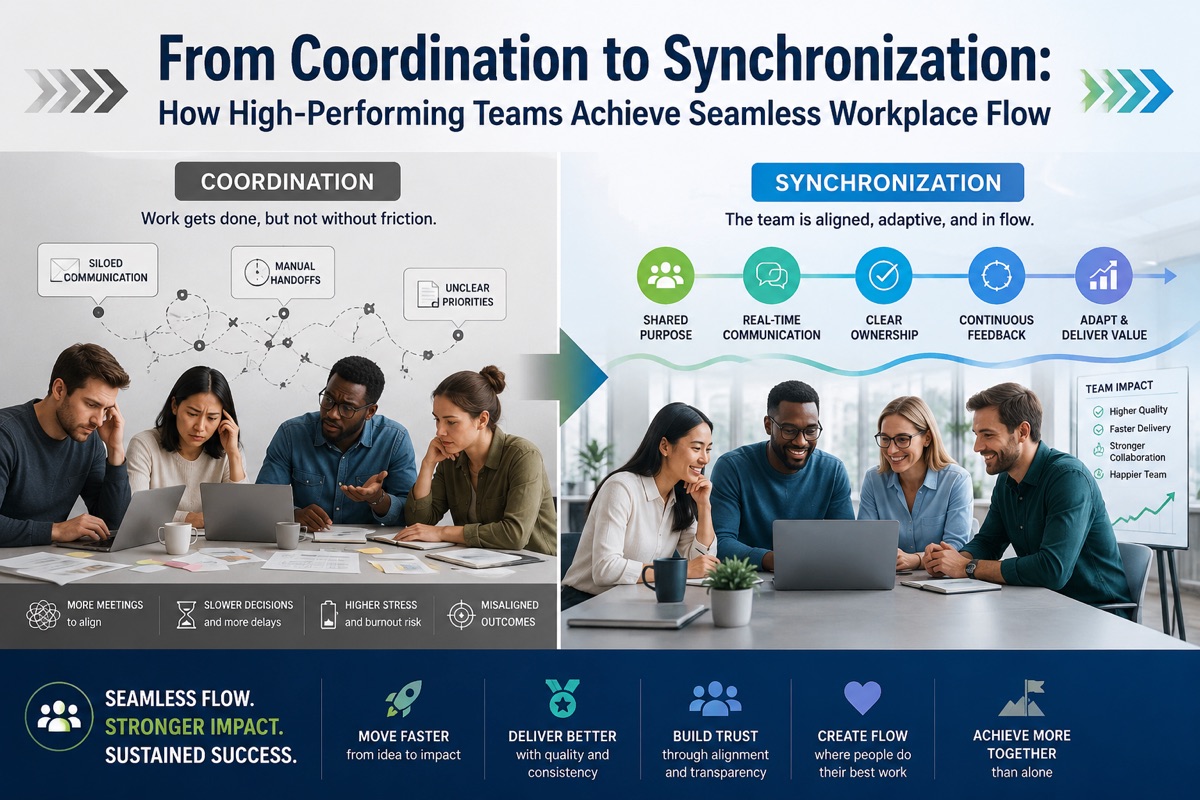
From Coordination to Synchronization: How High-Performing Teams Achieve Seamless Workplace Flow

Modern organizations depend on teamwork more than ever before. As projects become increasingly complex and workplaces adopt hybrid and flexible models, effective coordination is essential for maintaining productivity. However, many teams struggle with communication overload, interruptions, and inefficient workflows that slow progress and create frustration.
To address these challenges, businesses are implementing smarter workplace systems that improve visibility and reduce communication friction. Solutions such as an office busy light help employees communicate their availability instantly, allowing teams to coordinate more effectively without unnecessary interruptions. When communication becomes clearer, teams can shift from simple coordination to true synchronization.
What Separates High-Performing Teams from Average Ones?
High-performing teams do more than complete tasks efficiently. They operate with a shared understanding of priorities, responsibilities, and objectives. Team members know how their work contributes to larger goals and can adapt quickly when circumstances change.
The Role of Alignment in Daily Work Output
Alignment ensures that employees focus on the same objectives and understand how their responsibilities connect to broader organizational goals.
Teams with strong alignment often experience:
- Faster decision-making.
- Better collaboration.
- Fewer misunderstandings.
- Increased accountability.
- Higher productivity levels.
When everyone works toward the same outcomes, resources are used more effectively and workplace efficiency improves.
Why Efficiency Depends on Shared Understanding
Efficiency is not only about speed. It also depends on clarity. Employees who understand expectations, priorities, and workflows spend less time seeking information and more time completing meaningful work.
Clear communication helps reduce duplication of effort and minimizes delays caused by confusion or uncertainty.
Core Systems That Drive Team Productivity
Successful organizations establish systems that support communication, coordination, and workflow management.
Communication Frameworks That Reduce Friction
Poor communication remains one of the most common barriers to productivity. Teams benefit from structured communication processes that define how information is shared and when responses are required.
Effective communication practices include:
- Setting clear expectations.
- Using centralized communication channels.
- Limiting unnecessary meetings.
- Defining response priorities.
- Encouraging focused work periods.
These practices help employees stay informed without becoming overwhelmed. As a result, teams can communicate more effectively while maintaining focus on their most important tasks.
Time Optimization and Workflow Coordination
Time management systems help teams allocate resources effectively and maintain project momentum. Structured workflows reduce uncertainty and make it easier to track progress.
Organizations that prioritize workflow coordination often experience improved productivity, fewer bottlenecks, and stronger collaboration across departments.
Technology That Streamlines Team Interaction
Technology can significantly improve workplace efficiency when implemented thoughtfully.
Busy Light Indicators in the Office for Visual Coordination
Visual communication tools are becoming increasingly valuable in modern workplaces. An office busy light allows employees to communicate their status instantly, helping colleagues understand when interruptions should be avoided.
By providing real-time visibility, these tools help teams coordinate without relying on constant messages or status updates.
On a Call Lights for Real-Time Availability Signals
Remote meetings and virtual collaboration have increased the need for clear availability indicators. On-call lights provide a simple visual signal that informs colleagues when someone is attending a meeting or focused on important work.
The following table highlights common workplace coordination tools:
| Tool | Primary Benefit |
| Team Messaging Platforms | Fast communication |
| Project Management Software | Task visibility |
| Shared Calendars | Scheduling transparency |
| Office Busy Light | Reduced interruptions |
| On-Call Status Indicators | Real-time availability awareness |
These solutions help teams collaborate more effectively while protecting focus time.
Building a Culture of Accountability and Flow
High-performing teams thrive in environments where accountability and communication work together. Employees understand expectations, take ownership of their responsibilities, and respect colleagues’ focus time.
Organizations can support this culture by encouraging transparency, reducing unnecessary interruptions, and implementing systems that improve workplace awareness.
Final Thoughts
The most productive teams are not simply busy—they are synchronized. They communicate effectively, manage workflows efficiently, and use technology to reduce friction in daily operations.
By strengthening communication frameworks, improving workflow coordination, and implementing tools such as an office busy light, organizations can create environments where collaboration and productivity coexist. As workplaces continue to evolve, teams that prioritize alignment and efficiency will be best positioned for long-term success.