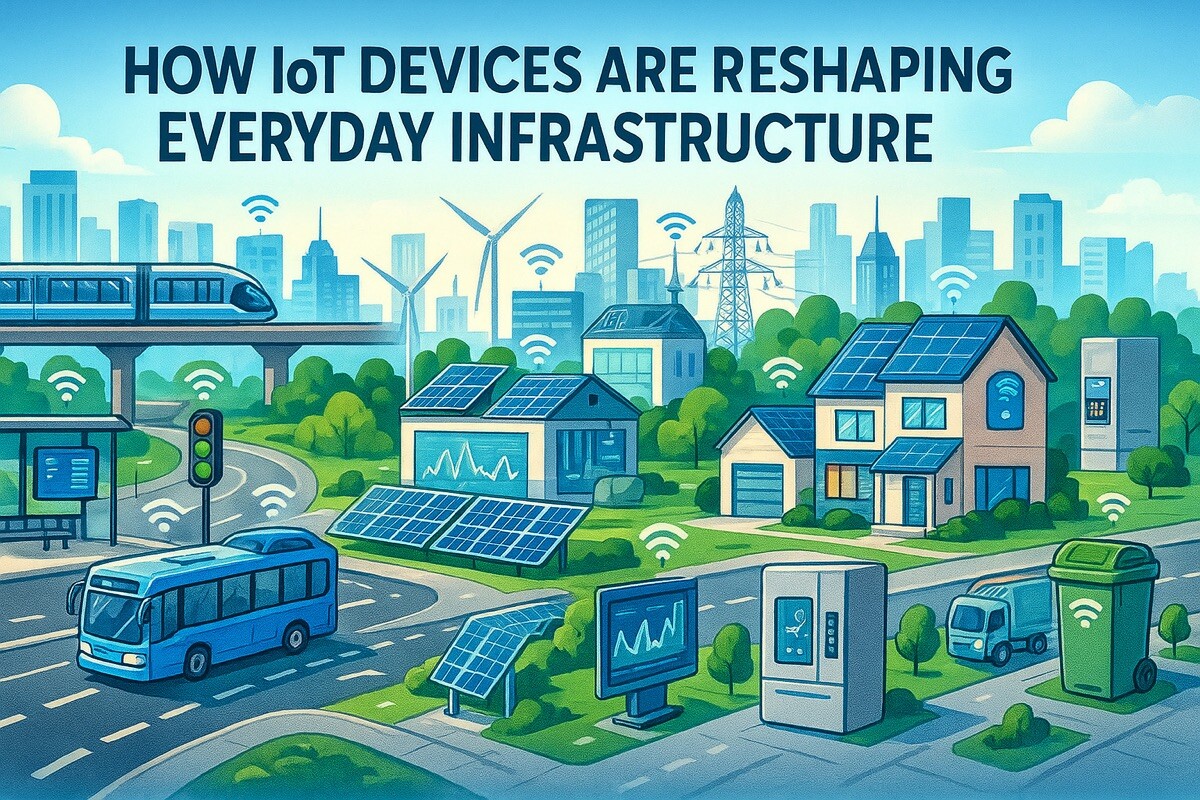
How IoT Devices Are Reshaping Everyday Infrastructure

Something remarkable is unfolding in cities throughout America, and you might not even notice it happening. Are the traffic signals coordinating your drive to work? They’re smart now. Those water mains running under your neighborhood? They’re talking to each other.
We’re looking at a future where 75 billion connected devices will be online by 2025, fundamentally altering everything from electrical grids to how hospitals operate. What felt like pure fantasy ten years back has become the backbone of modern community operations.
The Technology Powering Modern Cities
This infrastructure transformation sweeping across America isn’t some mystical phenomenon, it’s sophisticated technology pieces fitting together in ways that would’ve seemed impossible just a few years ago.
Core Components Transforming Infrastructure
IoT devices function as the living nervous system running through today’s infrastructure. We’re not discussing ordinary consumer electronics here. These are purpose-built sensors woven into roadways, commercial structures, and utility networks that continuously collect and transmit data. Picture them as dedicated sentries keeping constant watch on everything from water main pressure to street-level air composition.
Here’s something that’ll grab your attention: Using Watson AIOps, the average time to resolve incidents was reduced by 65 percent, according to one recent initial proof of concept project with a client. Those efficiency numbers make both city planners and commercial operators sit up and pay attention.
Why Traditional Systems Can’t Keep Up
Conventional infrastructure runs on predetermined schedules and fixes things after they break. A water main explodes, and crews respond. Signal lights cycle through patterns regardless of actual traffic flow.
This methodology succeeded when metropolitan areas were compact and predictable. Today? You’d have better luck managing a Fortune 500 company with telegraph machines. The traditional playbook simply cannot manage contemporary complexity.
The Role of Specialized Development Teams
Building dependable infrastructure demands the specialized knowledge that only a firmware development company brings to the table. These experts craft embedded software, ensuring sensors stay reliable and protected, enabling continuous operation even when environmental conditions turn hostile. They’re the backstage champions making certain your municipality’s intelligent street lighting stays operational, dodging the glitches and failures that plague cheaper consumer gadgets.
Without the specialized expertise a firmware development company delivers through battle-tested implementations, even premium sensor deployments risk transforming from assets into major headaches. The evolution toward smart infrastructure goes beyond simply scattering sensors everywhere; it’s engineering systems capable of learning, adjusting, and reacting to actual conditions in real time.
Smart Cities Leading the Change
Metropolitan areas nationwide are demonstrating that connected infrastructure isn’t theoretical futurism; it’s delivering tangible benefits to residents right now.
Traffic Management Revolution
Columbus, Ohio, earned its smart city reputation through deliberate action. After winning the Department of Transportation’s Smart City Challenge, the city deployed connected vehicle infrastructure across 85 intersections. The results were immediate: drivers spent less time at red lights, emergency responders reached people faster, and the air became cleaner. It was a substantial step forward in daily urban mobility.
San Francisco has taken this concept further with AI-driven traffic signals that adjust in real time based on congestion. The system studies traffic patterns and makes split-second decisions to keep cars moving smoothly, preventing gridlock before it ever has a chance to form.
Energy Grid Modernization
Portland’s creative approach to Internet of Things applications in energy management shows what’s possible when municipalities think outside the box. Their network of 20,000 intelligent streetlights is no longer just a series of sunset-activated switches.
Instead, they adjust brightness dynamically, responding to foot traffic, weather conditions, and nighttime hours. The result is lower energy use without sacrificing safe illumination, freeing up resources that can be reinvested in other community priorities.
These networks also incorporate renewable sources, regulate peak consumption, and identify outages almost instantly. When transformers fail, the grid can automatically reroute electricity while dispatching maintenance teams with exact coordinates, minimizing downtime and disruption.
Public Safety Enhancements
Boston’s public safety strategy shows how IoT in everyday life produces measurable community benefits. They positioned environmental monitors in neighborhoods tracking air composition, sound levels, and other livability factors. During extreme heat events, the infrastructure automatically boosts water delivery to parks and modifies traffic flows, reducing pollution in vulnerable zones. Emergency dispatch systems now interface directly with traffic controls, automatically generating clear pathways for ambulances and fire apparatus.
Utilities Getting Smarter
The pipes, cables, and delivery systems bringing essential services to your home and workplace are experiencing their own technological renaissance.
Next-Gen Power Distribution
Contemporary electrical grids barely resemble their ancestors. By the end of 2025, smart supply chain and logistics systems are expected to define how goods move efficiently. That same revolution is transforming energy distribution. Grid sensors identify problems before they escalate into widespread blackouts. When storms damage lines, the system isolates affected areas and redirects power around trouble spots.
Two-way communication means your utility provider learns about outages before you grab your phone. Smart meters deliver live consumption data, helping utilities forecast and manage peak loads, eliminating costly infrastructure expansions.
Water Infrastructure Innovation
America’s deteriorating water systems are receiving much-needed technological upgrades. Intelligent water meters do far more than record consumption; they spot anomalous patterns indicating leaks. Unexpected overnight water usage might reveal a burst pipe, generating alerts before small issues become catastrophic failures.
Acoustic monitors embedded in pipe networks detect the characteristic frequencies of leaks, locating underground problems before water surfaces. Municipalities deploying these technologies report preventing major ruptures and conserving millions of gallons yearly.
Waste Management Efficiency
New York City’s intelligent waste system employs fill-level monitors in containers and recycling receptacles to optimize collection paths. Trucks abandoned rigid schedules, servicing containers only when actually full. This approach slashes fuel expenses, cuts truck pollution, and reduces congestion from collection vehicles.
The monitors also flag contamination in recycling streams, boosting recovered material quality and increasing program revenues.
Buildings and Facilities
The environments where you spend most of your time, workplaces, residences, and public facilities, are becoming more responsive to human needs while consuming dramatically fewer resources.
Commercial Building Automation
Contemporary building management platforms represent some of the most compelling IoT technology benefits you’ll encounter. HVAC equipment in intelligent buildings has abandoned simple scheduling.
Indoor air monitoring became essential during the pandemic, but its value stretches well beyond COVID considerations. These platforms track carbon dioxide concentrations, particulate matter, and other factors influencing wellness and productivity. When air quality deteriorates, the system autonomously boosts ventilation.
Residential Infrastructure
Smart home capabilities are transitioning from premium features to construction standards in new developments. Builders install unified platforms controlling illumination, climate, security, and energy through a single interface. Property administrators utilize these systems to detect maintenance requirements remotely, arranging repairs before residents notice issues.
Energy tracking provides homeowners with granular visibility into consumption behaviors, helping identify waste and reduce monthly bills. Some platforms automatically shift usage during peak rate periods, generating savings without demanding constant oversight. Integrating residential systems with community infrastructure creates neighborhoods functioning as synchronized ecosystems rather than isolated units.
Healthcare and Transportation
Two vital sectors are witnessing particularly profound transformations through connected infrastructure, with serious implications for public welfare and safety.
Hospital Systems
Medical facilities deploy IoT extensively for equipment tracking, guaranteeing critical apparatus availability when needed. Intelligent sensors monitor temperature and moisture in storage areas for pharmaceuticals and biological specimens, preventing loss from equipment malfunctions. Patient flow platforms help hospitals manage capacity and minimize wait periods.
Remote monitoring infrastructure allows physicians to track patients recuperating at home, decreasing readmissions, and improving recovery trajectories. These systems alert medical providers to worrying vital sign changes, enabling proactive intervention.
Connected Highways
The Netherlands’ smart roadway programs demonstrate what’s achievable when infrastructure becomes an active transportation partner. Pavement sensors identify ice formation, triggering alerts and activating heating elements before conditions turn dangerous.
Bridge monitoring platforms track structural integrity continuously, catching potential problems years before they become critical. These systems establish the groundwork for autonomous vehicles requiring constant vehicle-to-infrastructure communication. Today’s foundation enables tomorrow’s transportation transformation.
Real Challenges and Solutions
Despite remarkable progress, deploying connected infrastructure presents substantial obstacles demanding thoughtful solutions from cities and organizations.
Security Concerns
Cybersecurity creates sleepless nights for infrastructure administrators, and justifiably so. Every connected sensor becomes a potential attack vector. Mission-critical systems demand end-to-end encryption, secure authentication, and consistent software maintenance fundamentals that many consumer IoT products lack.
Metropolitan areas are adopting zero-trust frameworks and network compartmentalization, limiting breach damage. Security assessments happen before new system deployment, and incident response protocols address infrastructure-specific attack scenarios.
Implementation Hurdles
Budget limitations remain the primary obstacle for numerous municipalities. Smart infrastructure demands substantial initial investment, despite long-term savings justifying expenditures. Public-private collaborations help, with technology firms funding infrastructure for limited data access.
Legacy system compatibility creates technical complications. Most cities cannot simply discard functioning systems and rebuild. They require middleware bridging old and new equipment, incrementally modernizing infrastructure without service interruptions. Recruiting skilled personnel to manage these systems presents another ongoing challenge. Cities are funding training initiatives and collaborating with universities to build local talent pipelines.
The Path Forward for Connected Communities
The technological transformation of American infrastructure isn’t decelerating; it’s gaining momentum. Cities investing strategically today are witnessing measurable gains in operational efficiency, environmental sustainability, and resident quality of life. The technology has evolved beyond experimental phases into validated solutions delivering reproducible outcomes.
From traffic coordination to utility management, from building automation to public safety operations, the evidence is undeniable: smart infrastructure delivers results. Your real question isn’t whether to embrace these technologies, but how rapidly you can implement them to serve your community more effectively. Each delayed day represents missed opportunities for cost savings, enhanced services, and environmental advantages that accumulate over time.
FAQs on Smart Infrastructure Answered
1. How secure are IoT systems controlling critical infrastructure?
Security quality varies significantly by deployment. Modern implementations employ encryption, authentication, and network isolation, protecting against intrusion. Consistent security reviews and updates remain essential for maintaining protection as threats evolve.
2. Can small cities afford smart infrastructure upgrades?
Numerous solutions scale effectively for smaller communities. Beginning with focused pilot areas allows municipalities to demonstrate value before major investments. Federal funding and phased rollouts make adoption more financially accessible.
3. What happens during power outages or disasters?
Properly engineered systems incorporate backup power, redundant communications, and graceful degradation. Critical operations continue during disruptions, while less vital features temporarily suspend, conserving resources and maintaining core functionality.