The Tech Stack Powering Next Generation Science Education

Science classrooms look very different today than they did a decade ago. Textbooks and basic paper worksheets are no longer the primary methods for teaching complex topics. Modern instructors utilize an interconnected network of hardware, software, and digital platforms.
Modern Open Source Curriculum Integrations
High-quality science instruction works best when classroom lessons and hands-on activities reinforce one another. When PASCO partnered with OpenSciEd, educators gained another way to connect open educational materials with real-world data collection during science instruction. This kind of alignment helps students apply concepts more clearly while staying engaged throughout each lesson.
Open resource platforms allow districts to customize their pathways without spending thousands of dollars on proprietary textbooks.
Instructors can modify the shared documents to fit the precise skill levels of their current cohorts. Gathering physical data becomes much simpler when the digital guides match the sensors on the desks.
These combined systems remove the friction from lesson preparation. School districts can allocate their funds toward physical lab tools rather than recurring licensing fees. Students benefit from a unified interface that guides them from the initial hypothesis to the final analysis.
Integrating Emerging Technologies In Technical Training
Modern classrooms are moving away from passive lecturing toward active experimentation. A publication from an international development bank explained that embedding emerging technologies like artificial intelligence into technology education through inquiry- and project-based learning can help students succeed.
Using projects to teach advanced physics or chemistry keeps young minds engaged for longer periods. Instructors can set up multi-week investigations that require students to track environmental data or program automated systems.
Students learn to troubleshoot errors when their digital instruments do not match their expectations. Overcoming these small setbacks teaches resilience and critical thinking skills.
The Proliferation Of Classroom Intelligence Tools
Software applications are shifting the workload for both students and instructors. A state education department webpage noted that over the past 3 years, generative artificial intelligence tools have rapidly become accessible to students, educators, and school communities.
Teachers can utilize these advanced models to differentiate their instruction for diverse classrooms.
Automated programs can rewrite a complex article at multiple reading levels within seconds. Students receive immediate feedback on their writing or code, which prevents them from getting stuck when an instructor is busy helping someone else.
These automated assistants can generate practice problems tailored to a specific student’s weaknesses. A teenager struggling with chemical equations receives extra support without slowing down the rest of the class.
Aligning State Standards With Digital Platforms
Educational tools must connect directly with state guidelines to justify their placement in a district budget. A regional county office of education highlighted a system aligned with the Common Core State Standards and California Next Generation Science Standards.
Their platform offers ready-to-use lesson plans with embedded formative assessment and accessibility strategies to support diverse learner populations.
Having built-in check-ins makes it simple to track comprehension during a live lab session. Teachers can glance at a dashboard to see which lab groups are falling behind. This immediate feedback loop allows for instant course corrections before students finish an entire experiment with incorrect assumptions.
Administrators appreciate these digital alignments since they guarantee compliance with statewide benchmarks.
Lesson planning becomes less stressful when the digital curriculum automatically logs the standards met by each activity. Instructors can focus on guiding students rather than filling out compliance paperwork.
Hardware Solutions For Modern Classrooms
Software requires reliable physical tools to gather the information that students analyze. Modern science desks feature a variety of digital measurement tools that replace old glass thermometers and mechanical stopwatches.
- Wireless pH sensors that track chemical reactions in real time
- Digital force gauges that measure impact during physics collisions
- Optical dissolved oxygen probes for water quality testing
- Carbon dioxide monitors used for plant respiration experiments
These hardware tools allow students to run multiple trials within a single class period. Spending less time on manual plotting means more time spent analyzing patterns. Classrooms can cover twice as many concepts when the setup process takes minutes instead of half an hour.
Data-Driven Laboratory Analytics
Once students gather data, they must learn to interpret it using professional software. Graphic programs let kids transform raw numbers into visual trends with a few clicks.
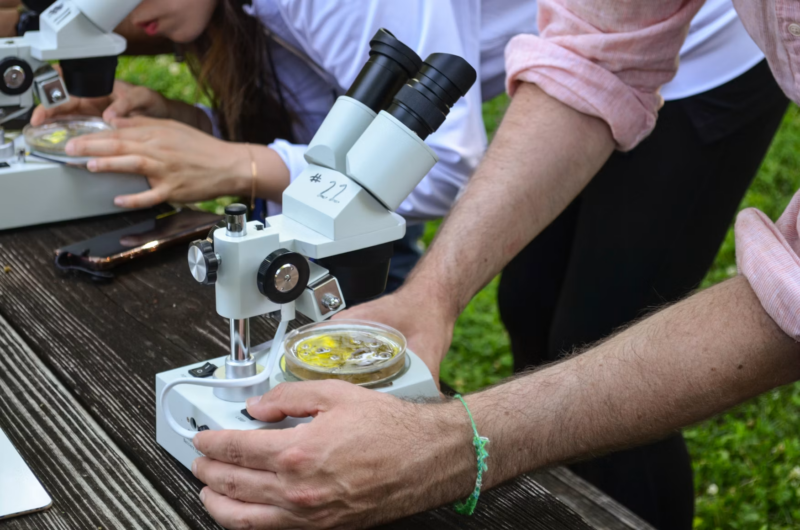
Some classrooms use 3D modeling software to examine molecules or geologic formations. These digital models show details that are impossible to see with a standard microscope. Students can rotate, dissect, and alter these digital structures to test their hypotheses safely.
Virtual simulations complement physical experiments by letting students alter variables that would be dangerous or impossible to change in a physical lab. A student can change the gravity of a simulation to see how a pendulum swings on Mars.
Building a modern classroom infrastructure requires careful planning and the right mix of digital tools. When hardware and open software connect smoothly, students get a clearer picture of how the physical world operates.
Instructors save hours of prep time and receive instant data on student understanding. Investing in these comprehensive setups prepares the next generation of researchers for the challenges of tomorrow.
