Custom Petroleum Logistics Software: Key Features Every Modern Web Platform Should Include

The petroleum industry relies on highly coordinated logistics operations where every delay, routing error, or inventory discrepancy can affect profitability. Managing fuel transportation requires more than tracking shipments. Companies must coordinate dispatching, fleet operations, storage facilities, compliance, and customer deliveries while responding quickly to changing market conditions.
To meet these demands, businesses are increasingly investing in custom web platforms instead of relying on disconnected legacy systems. Organizations looking for scalable digital solutions can benefit from petroleum logistics software developed by companies like Wezom, enabling them to automate critical workflows, integrate business systems, and build a platform that reflects their operational requirements rather than adapting to generic software.
This article explores the essential features every modern petroleum logistics platform should include and explains why custom web development provides long-term advantages over off-the-shelf solutions.
Why Legacy Logistics Systems No Longer Meet Industry Demands
Many petroleum companies still rely on desktop applications or multiple disconnected systems that were implemented years ago. While these tools often perform individual tasks adequately, they rarely provide a complete picture of logistics operations.
As organizations grow, operational complexity increases. Additional storage terminals, larger fleets, and expanding customer networks create more data that must be processed in real time. Without centralized software, dispatchers, warehouse teams, and fleet managers frequently work with different information, making coordination slower and increasing the likelihood of costly errors.
Modern web-based platforms solve these challenges by connecting logistics processes through a single interface that is accessible from any location. Instead of maintaining separate systems for inventory, dispatching, reporting, and fleet management, businesses gain one integrated environment where information is updated continuously.
Core Features of Modern Petroleum Logistics Software
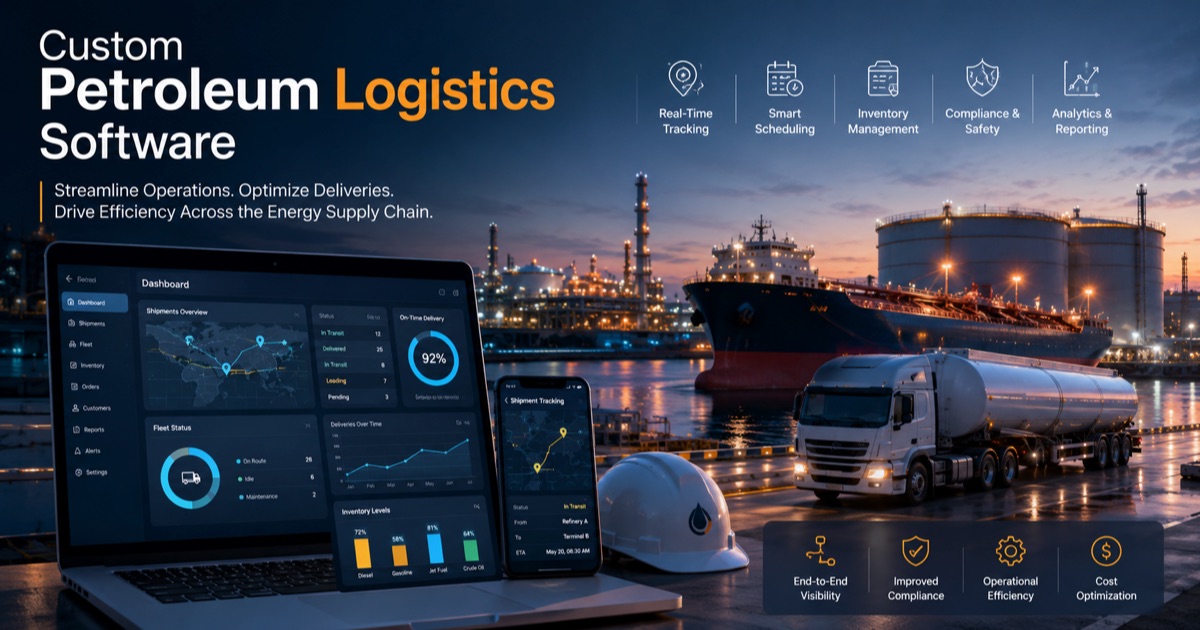
The most effective logistics platforms are designed around business workflows rather than isolated functions. Instead of solving a single operational challenge, they connect multiple processes that work together throughout the supply chain.
Essential capabilities typically include:
-
Fleet and vehicle management;
-
Dispatch planning and delivery scheduling;
-
GPS tracking with real-time fleet visibility;
-
Multi-location inventory management;
-
Route optimization;
-
Customer order management;
-
Compliance documentation;
-
Reporting and performance analytics;
-
Integration with ERP and CRM systems.
When these features operate within one platform, companies reduce manual work while improving communication between departments. Managers spend less time gathering information and more time making operational decisions.
Real-Time Visibility Improves Operational Control
One of the biggest advantages of web-based petroleum logistics software is continuous access to operational data. Managers no longer need to wait for manual reports or contact multiple departments to understand the current status of deliveries.
GPS integration allows dispatchers to monitor fleet movement in real time, identify delays, and adjust schedules when unexpected situations occur. Inventory dashboards provide immediate visibility into stock availability across storage facilities, while order tracking helps customer service teams communicate more accurate delivery estimates.
This level of transparency enables businesses to respond proactively instead of reacting after problems have already affected operations.
Intelligent Automation Reduces Manual Work
Automation is central to modern logistics platforms because many operational tasks follow predefined business rules. Replacing manual coordination with automated workflows helps organizations reduce administrative effort while improving accuracy.
For example, dispatching can be automated based on vehicle availability, driver schedules, delivery priorities, and geographic location. Route optimization algorithms evaluate multiple variables simultaneously to determine the most efficient transportation plan, reducing unnecessary mileage and lowering fuel consumption.
Automation also improves consistency in reporting, compliance documentation, and delivery confirmation. Instead of relying on manual data entry, information flows automatically between connected systems, minimizing the risk of human error.
Integration Creates a Connected Business Ecosystem
A logistics platform delivers the greatest value when it becomes part of a broader digital ecosystem rather than operating as standalone software.
Modern petroleum logistics software should integrate with:
-
ERP platforms;
-
CRM systems;
-
Accounting software;
-
GPS and telematics providers;
-
Warehouse management systems;
-
IoT monitoring devices;
-
Business intelligence tools.
These integrations eliminate duplicate data entry and allow departments to work with synchronized information. Financial teams can access delivery data immediately, inventory updates become available across the organization, and management receives consolidated reporting without manual preparation.
The result is a more efficient business environment where information flows automatically between systems.
Why Scalability Matters in Web Development
Business growth often exposes the limitations of generic software. As companies expand into new regions or increase fleet capacity, they require additional functionality, integrations, and user roles that standard platforms may not support.
Custom web applications are designed with scalability in mind. New modules can be introduced as business requirements evolve, whether that involves additional storage facilities, international operations, or advanced reporting capabilities.
Cloud-based architecture further improves scalability by allowing organizations to increase system capacity without replacing their existing platform. This flexibility helps businesses adapt to market changes while protecting their long-term technology investment.
Security and Compliance Cannot Be an Afterthought
Petroleum logistics involves sensitive operational and commercial information, making cybersecurity an essential part of platform development.
Modern web applications should include robust security features such as:
-
Role-based user permissions;
-
Multi-factor authentication;
-
Data encryption;
-
Secure API communication;
-
Continuous activity logging;
-
Automated backups;
-
Compliance with industry regulations.
Building these capabilities into the platform from the beginning reduces operational risk and helps organizations protect critical business information while meeting regulatory requirements.
Best Practices for Developing Petroleum Logistics Software
Developing an effective logistics platform requires more than implementing modern technologies. Success depends on understanding business operations before writing a single line of code.
Organizations should focus on several key principles:
-
Analyze existing logistics workflows.
-
Identify operational bottlenecks.
-
Define measurable business objectives.
-
Prioritize integrations with existing systems.
-
Design intuitive interfaces for different user roles.
-
Plan for future scalability.
-
Continuously improve the platform based on operational feedback.
A phased implementation strategy also reduces risk by allowing businesses to introduce automation gradually while employees adapt to new processes.
Future Trends in Web-Based Logistics Platforms
Digital transformation continues to reshape petroleum logistics, and web technologies play an increasingly important role in supporting intelligent operations.
Several innovations are expected to influence future platform development:
-
Artificial intelligence for predictive planning;
-
Machine learning for demand forecasting;
-
IoT-enabled monitoring of vehicles and storage facilities;
-
Advanced analytics with interactive dashboards;
-
Cloud-native architectures;
-
Predictive fleet maintenance;
-
Enhanced cybersecurity for connected infrastructure.
These technologies will help businesses improve efficiency while creating more resilient and responsive supply chains.
Conclusion
Building an effective logistics platform requires more than combining standard software modules. Petroleum companies need solutions that reflect their operational workflows, integrate with existing business systems, and provide the flexibility to evolve as requirements change.
Custom petroleum logistics software gives organizations greater control over dispatching, inventory, fleet management, analytics, and compliance while creating a centralized environment for data-driven decision-making. Combined with modern web technologies, these capabilities help businesses reduce operational costs, improve service quality, and build a scalable digital foundation for future growth.