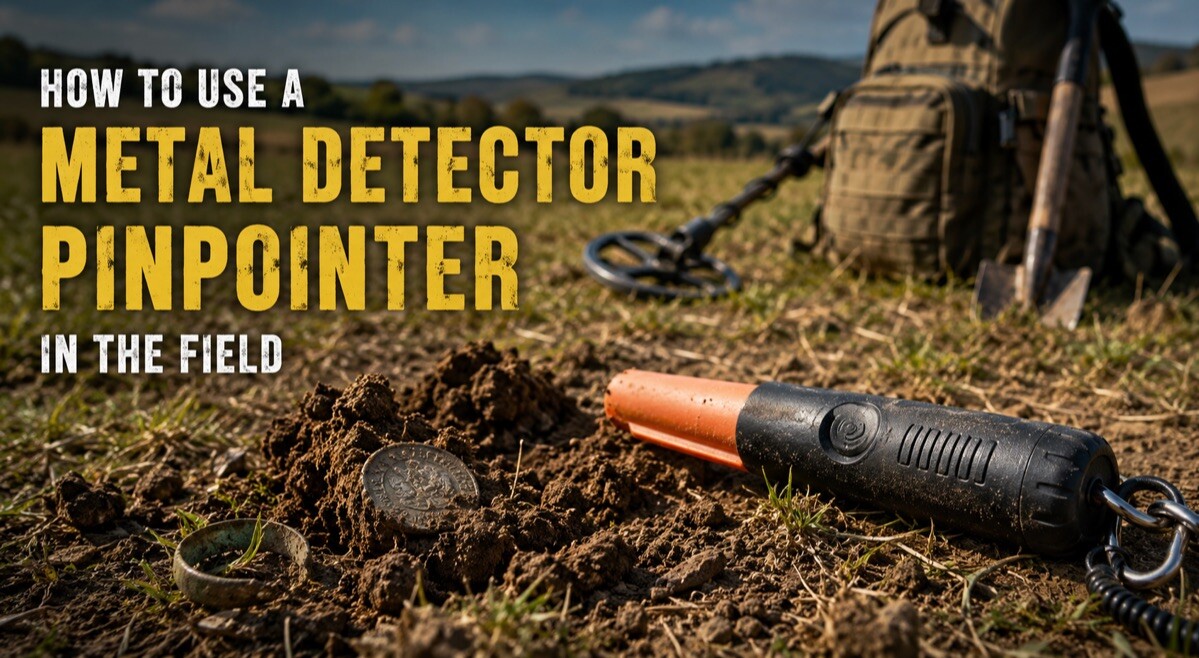
How to Use a Metal Detector Pinpointer in the Field

How to Use a Metal Detector Pinpointer in the Field
A metal detector pinpointer helps detectorists move from a general signal to the exact location of a buried object without wasting time on unnecessary digging.
The main detector is used to scan a larger area. Once it gives a repeatable signal, the next step is recovery. This is where many beginners lose time. They dig a plug, remove soil, check again, dig more, and sometimes still cannot find the object. A pinpointer makes this stage much simpler.
It works best when used as part of a clear recovery process.

Step one: confirm the signal
Before digging, swing the detector over the target from different directions. This helps identify the center of the signal and reduces the chance of opening the ground in the wrong place.
After the target area is marked, the detectorist can cut a small plug or remove sand depending on the location. The goal is to disturb as little ground as possible while still reaching the object.
Step two: check the plug and the hole
After opening the ground, turn on the pinpointer and check the removed plug first. Many coins and small objects remain inside the plug instead of falling into the hole.
If the pinpointer reacts inside the plug, the target can usually be recovered without digging deeper. If there is no signal, the next step is to check the hole, especially the sidewalls and bottom.
A pinpointer for metal detecting is useful because targets are not always exactly where the main detector seemed to indicate. They may be tilted, deeper than expected or located at the edge of the recovery area.
Step three: separate the target carefully
When the pinpointer signal becomes strong, remove soil slowly by hand or with a small digging tool. Avoid forcing a shovel directly into the center of the signal, especially when the target could be a coin, ring or relic.
Careful recovery helps prevent scratches and damage. This matters because the value of a find is often unknown until it is cleaned and identified.
Why a pinpointer saves time
A hunt may include dozens of signals. Saving even a minute on each recovery can make a big difference over several hours.
A metal detecting pinpointer reduces repeated checking with the main detector. It also helps avoid digging too wide or missing small targets hidden in loose soil.
For park hunting, this means cleaner plugs. For field hunting, it means faster sorting through dirt. For beach hunting, it means easier recovery from sand and wet material.
What to look for in a pinpointer
When choosing the best metal detector pinpointer, useful features include good sensitivity, simple controls, strong construction, a clear audio or vibration signal and water resistance.
A waterproof pinpointer may be helpful for beach hunters or anyone searching in wet ground. A bright color can also make the tool easier to find if it is dropped in grass, sand or leaves.

Final thought
A metal detector pinpointer is a small tool, but it can change the rhythm of a hunt. Instead of digging wider and guessing where the target is, the detectorist can work with more accuracy.
Better accuracy means faster recovery, less ground damage and a more organized detecting experience.