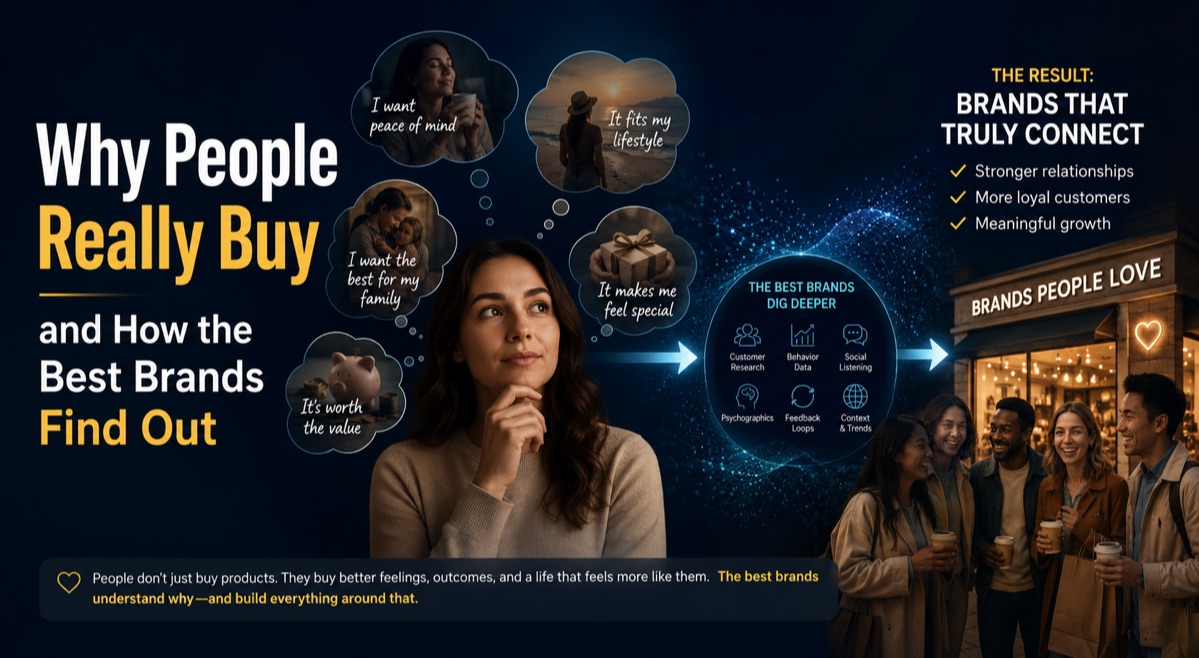
Why People Really Buy and How the Best Brands Find Out

Every sale starts with a decision that happens in a few short seconds. A shopper scans the options, weighs them against habit and price and mood, then reaches for one product over another.
Understanding that split-second choice is one of the most valuable things any business can do. Get it right and growth follows, get it wrong and even a great product can sit untouched on the shelf.
Key Takeaways
- Buying decisions are driven as much by behaviour and context as by what shoppers say they want.
- Online, small friction points quietly cost sales, so finding and fixing them is high-leverage work.
- In physical retail, packaging, placement and the path to purchase shape what ends up in the basket.
- Specialist insight, whether in-house or external, turns scattered data into decisions that actually move sales.
The gap between what people say and what they do
Ask shoppers why they bought something and you will get a tidy, rational story. Watch what they actually do and the picture is messier, faster and far more revealing.
This gap is exactly why guesswork is so risky. The brands that grow tend to be the ones that study real behaviour rather than leaning on opinions or assumptions.
That behaviour shows up everywhere, from a late-night scroll through an online store to a ten second pause in front of a supermarket shelf. Each setting has its own signals worth reading.
Winning the digital path to purchase
Online, the journey from interest to checkout is rarely a straight line. People click, compare, get distracted and abandon carts for reasons that often have nothing to do with the product itself.
A slow page, a confusing menu or one form field too many can quietly cost you sales. Learning to spot these conversion killers is some of the highest-leverage work an online store can do.
The fix is rarely dramatic. More often it is a run of small, evidence-based tweaks that together lift the share of visitors who follow through to a purchase.
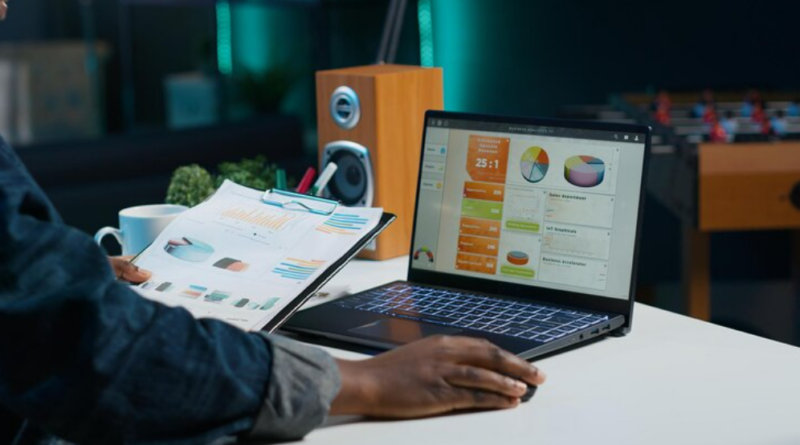
What makes this work is data tied to real behaviour rather than hunches. Heatmaps, funnels and session recordings show where attention drifts and where buying intent quietly fades away.
The same logic applies to the words on the page. Clear product descriptions, honest reviews and one obvious next step all reduce the hesitation that pushes people toward the back button.
The shelf is its own battleground
Physical retail plays by a different set of rules. A shopper in a busy aisle makes choices in seconds, swayed by packaging, placement, price cues and the story a brand tells at the shelf.
This is the world of shopper marketing, a discipline built around the moment of decision in store. It blends category strategy, pack design and point-of-sale thinking to gently shape the final choice.
For fast-moving consumer goods brands, small shifts here carry big consequences. A range reset or a pricing change can swing share across an entire category in a matter of weeks.
Unlike a website, you cannot quietly run an A/B test on a physical aisle. Decisions about what goes where on the shelf lean heavily on solid research into how real shoppers move, scan and finally choose in the moment of purchase.
Making sense of all of that takes real specialist expertise. Brands that want clear, commercially focused guidance often choose to find a shopper marketing agency that lives and breathes category and shopper behaviour.
The right partner does far more than hand over reports. It connects shopper evidence to real decisions about range, pricing and retailer conversations, the choices that genuinely move sales.

Where online and offline meet
The line between digital and physical shopping keeps blurring. People research online and buy in store, or browse a shelf and then order later from their phone.
That is why the smartest brands treat the shopper journey as one connected story. The same person who abandons a cart at midnight is often the one comparing packs in the aisle the next morning.
Reading both halves of that journey and joining them up is what separates brands that simply react from brands that lead. The payoff is a clearer and faster read on what shoppers want next.
Bringing it together
Behind every purchase is a decision shaped by habit, context and a hundred small cues most shoppers never consciously notice. The businesses that grow are the ones that take the time to understand it rather than guess at it.
Whether your battleground is a checkout page or a supermarket shelf, the principle holds. Study what shoppers really do, clear away whatever gets in their way and the sales tend to follow.
Frequently Asked Questions
What is shopper marketing?
Shopper marketing focuses on influencing buying decisions at or near the point of purchase. It covers things like packaging, in-store placement, pricing cues and the path a shopper takes before settling on a product.
How is it different from regular brand marketing?
Traditional marketing often builds awareness and brand image over time. Shopper marketing zeroes in on the moment of decision, aiming to turn interest into an actual purchase whether that happens in store or online.
Why do shoppers’ actions differ from what they say?
People tend to rationalise decisions after the fact and are not always aware of what truly drove them. Observing real behaviour usually reveals more than surveys alone, which is why behavioural data carries so much weight.
Do small businesses benefit from this thinking too?
Absolutely. Even without a large research budget, watching where customers hesitate either online or in store and then removing that friction can lift sales for a business of almost any size.