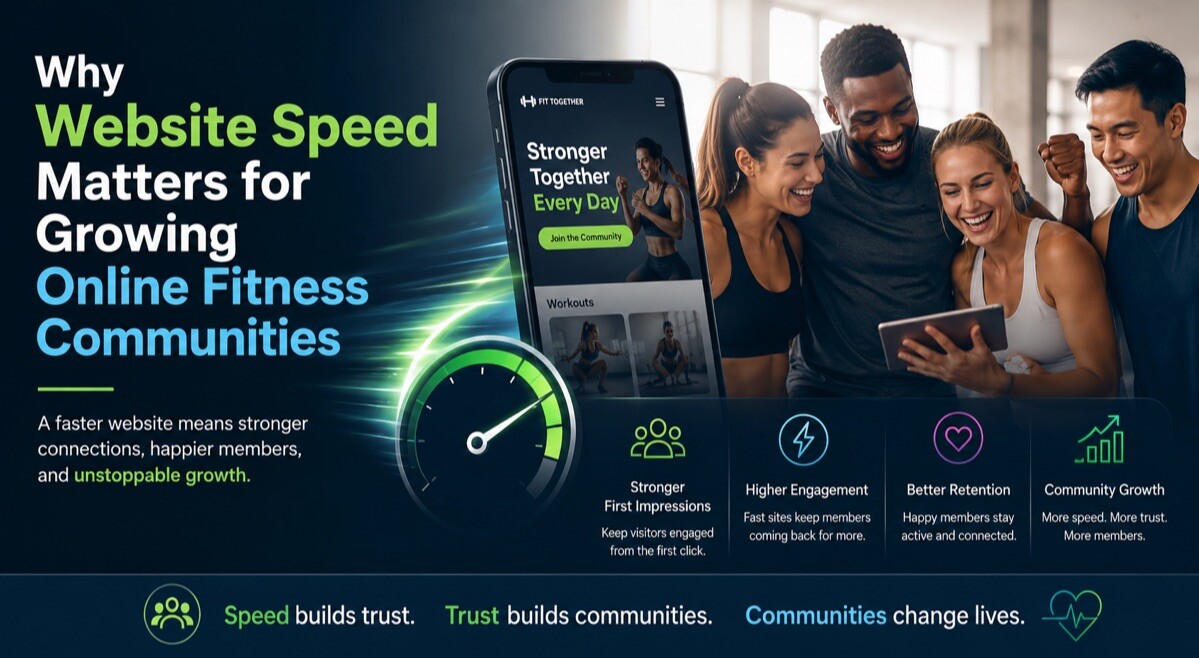
Why Website Speed Matters for Growing Online Fitness Communities

Picture this: someone grabs their phone, pumped up and ready to join your fitness community, and your site just… hangs. Spins. Does nothing useful. So they leave. Just like that, gone forever. Studies show that 40% of visitors abandon a site that hasn’t loaded within three seconds. For fitness platforms, where motivation is immediate and attention is short, that statistic stings. Seriously stings. Understanding website speed for fitness websites isn’t some nerdy backend concern; it’s the actual foundation holding your community together.
Let’s get into the specifics. Because once you understand how speed shapes first impressions and fitness website SEO, you’ll realize just how quietly a sluggish site can bleed your community dry one frustrated visitor at a time.
The Real Connection Between Site Speed and Fitness Community Growth
Speed isn’t a technical checkbox you tick and forget. It’s woven into how people feel when they use your platform, and those feelings determine whether they stick around or quietly disappear.
Speed as a Core User Experience Factor
Fitness enthusiasts rarely browse without a purpose. Whether they’re looking for a workout, joining a community, or researching new training methods, they expect a fast and seamless experience. Educational resources that explain different fitness approaches can often be the first touchpoint for potential users before they commit to a platform.
For example, many people looking to understand the benefits, techniques, and practical applications of rebounding exercise seek reliable information before taking the next step in their fitness journey. If a website loads slowly or creates unnecessary friction during that research process, visitors are likely to leave and continue their search elsewhere.
Google’s research consistently shows that bounce rates increase as page load times rise. That’s why leading fitness platforms invest heavily in performance optimization. Website speed plays a critical role in keeping users engaged, building trust, and encouraging long-term participation within a fitness community. A slow website can undermine credibility, while a fast, responsive experience helps users feel confident in the platform from the very first visit.
Engagement, Retention, and What the Data Shows
Speed isn’t just about that first visit; it shapes daily habits over time. When forum pages lag, members stop contributing. When live class links stutter, attendance quietly drops off.
One mid-size fitness platform discovered that shaving just 1.5 seconds off their load time boosted weekly forum activity by over 30%. Members who got fast, frictionless access came back more often and lingered longer each session.
Online fitness community growth runs on consistent, seamless experiences. Speed is what makes that consistency possible.
How Website Speed Shapes Your Fitness Website SEO
Keeping your current members happy is one thing. But speed also determines whether new members ever find you in the first place, and Google has a lot to say about that.
Speed as a Google Ranking Signal
Google’s Core Web Vitals, measuring load speed, interactivity, and visual stability, are confirmed ranking factors now. Fitness sites that score poorly get buried in search results, even when their content is genuinely excellent.
Fitness website SEO has evolved beyond keyword stuffing. Fast-loading sites earn better rankings, pull in more organic traffic, and compound your community’s visibility month after month. Slow sites simply don’t get the exposure, no matter how good the content hiding behind them is.
How Slow Pages Bury Your Best Content
Ranking higher is great. But it only matters if your content actually gets found and consumed, and sluggish performance can quietly bury your best resources before a single person clicks.
When pages crawl, Google’s crawl budget gets eaten up by technical delays instead of indexing your actual content. Workout guides, nutrition breakdowns, video tutorials, he resources your community relies on can stay invisible in search results indefinitely.
The importance of website speed hits hardest here. Content that should be driving discovery and building your authority simply never reaches the people searching for it.
Faster Sites Convert More Members Here’s the Math
Better visibility brings more traffic. But speed’s influence doesn’t stop at the door. Every extra second of load time actively threatens your ability to turn curious visitors into paying members.
Load Times and Your Fitness Funnel
Conversion rates can drop by up to 17% for every additional second of load time. For a fitness platform selling memberships, challenge sign-ups, or digital coaching programs, that’s not abstract; it’s real revenue vanishing in real time.
Someone clicks your “Join Now” button and waits three seconds. They’re already reconsidering. Two more seconds? Gone. Speed-optimized fitness sites convert at measurably higher rates. Full stop.
Mobile Speed Isn’t Optional
Losing sign-ups on the desktop hurts. But most of your fitness audience is on their phones, which makes mobile performance a genuine growth strategy, not a nice-to-have.
Mobile-first design paired with progressive web apps gives fitness communities a real competitive edge. Whether members are pulling up quick HIIT routines, watching workout demos, or scrolling community forums between sets, pages need to open fast.
The website’s speed for mobile users can’t be overstated. A sluggish mobile experience doesn’t just irritate; it permanently loses people who might have become your most loyal community members.
Practical Ways to Boost Your Fitness Site’s Performance
Understanding why speed matters is empowering. Acting on it is where the growth actually happens. Here are the moves worth making first.
Compress Images and Video Without Sacrificing Quality
High-res fitness photography and demonstration videos are essential for engagement, but they’re also the most common culprits behind bloated load times. Tools like ShortPixel, Smush, or Squoosh compress files without any visible quality loss.
For video, hosting through Vimeo or YouTube rather than directly on your server dramatically cuts server load. Add lazy loading, where media only loads when a user actually scrolls to it, and your initial page weight stays lean, and your speed scores stay strong.
Upgrade Your Hosting, CDN, and Caching Setup
Leaner files help enormously, but the infrastructure running your site matters just as much, especially during live classes or high-traffic community events.
Cloud hosting providers like Kinsta or WP Engine, paired with a CDN like Cloudflare, distribute your content globally so members everywhere get fast load times. Database caching through Redis or Memcached keeps dynamic forum pages snappy even when hundreds of members are online simultaneously.
Clean Up Your Code and Ditch Bloated Themes
Hosting sorted? Good. Now look inward. Bloated themes stuffed with features you’ll never use quietly drag performance down in ways you won’t immediately notice.
Lightweight frameworks like Astra or GeneratePress, combined with minified CSS and JavaScript, carve off critical milliseconds. Run regular diagnostics through Google PageSpeed Insights and GTmetrix to track progress and prioritize fixes that actually move the needle for your community.
What the Best Online Fitness Communities Are Doing Differently
You’ve got a solid optimization toolkit now. But the forward-thinking platforms aren’t just keeping pace; they’re using emerging technology to raise the bar entirely.
AI Personalization Demands Fast Delivery
AI-driven platforms now offer customized workout plans in seconds. The catch? Nobody waits around for personalized content to load, especially when they’re exploring options like a rebounding exercise routine that fits their specific fitness goals. When smart personalization meets fast delivery, that’s when engagement and retention genuinely soar.
Communities recommending adaptive rebounding exercise plans, HIIT sessions, or progressive programs need speed as their backbone. Without it, even brilliant personalization falls completely flat.
Live Streaming and Real-Time Challenges
Personalization raises expectations. Live events demand even faster performance to actually meet them.
Brands like Mirror and Beachbody have demonstrated that seamless streaming directly correlates with attendance rates and community loyalty. When a live challenge loads instantly and runs without a hitch, members develop a consistent habit of showing up. Even a few seconds of buffering during a live event can permanently dent trust in your platform.
Your Action Plan for Faster Fitness Website Performance
Seeing what’s possible when speed meets smart innovation is exciting. But real community growth only happens when you execute a clear, repeatable plan.
A Practical Starting Checklist
Here’s where to begin when you’re ready to improve fitness website performance:
– Run a baseline test using Google PageSpeed Insights and GTmetrix
– Compress all images and enable lazy loading site-wide
– Upgrade to cloud-based hosting with built-in CDN support
– Switch to a lightweight, fitness-optimized theme
– Minify your CSS, JavaScript, and HTML files
– Schedule monthly speed audits to catch any regressions early
Monitoring Tools Worth Using Consistently
Your initial speed overhaul is a genuine win. But maintaining that performance requires consistent attention over time.
Track Core Web Vitals monthly through Google Search Console. Set performance alerts through UptimeRobot or Pingdom. Keep an eye on Time to First Byte (TTFB), Largest Contentful Paint (LCP), and Cumulative Layout Shift (CLS) against industry benchmarks so your community never quietly slips backward without you noticing.
Future-Proofing: Building for What’s Coming Next
Solid speed strategy in place? Good. You’re already ahead of most fitness platforms online. But tomorrow’s demands are worth thinking about today.
VR Workouts and Next-Gen Fitness Tech
Immersive fitness experiences, VR workout environments, metaverse group classes, and biometric-responsive training will demand dramatically faster load times than today’s standards require. Communities investing in speed infrastructure now are quietly building the foundation that will support these experiences naturally when the time comes.
Today’s performance upgrades aren’t just about current SEO and conversions. They’re the groundwork for wherever fitness technology goes next.
Final Thoughts
Speed isn’t a backend detail. It’s the heartbeat of your online fitness community. From the instant someone lands on your page to the moment they hit “sign up” or tune into a live class, every millisecond shapes their experience and their decision.
Website speed for fitness websites directly drives online fitness community growth, search rankings, conversions, and long-term loyalty. Prioritize performance now. It’s the difference between a community that genuinely thrives and one that quietly loses its people to a competitor who simply loads faster.
Common Questions About Fitness Website Speed
How does website speed affect live fitness class attendance?
Slow loading causes members to miss start times or give up entirely. Even 2–3 seconds of delay before a live stream significantly reduces attendance and erodes the habit-forming consistency that healthy fitness communities depend on.
What free tools can I use to monitor fitness website speed?
Google PageSpeed Insights, GTmetrix, and Pingdom are all solid, free options. Each provides actionable diagnostics, Core Web Vitals scores, and performance history, with no technical expertise required.
How can slow speed hurt the discoverability of rebounding exercise content?
When your site loads slowly, search engines waste crawl budget on technical delays rather than indexing your content. That means even well-written guides about rebounding exercise may never appear in relevant searches, regardless of how genuinely helpful they are.
Should fitness sites prioritize speed even with exceptional trainers and content?
Absolutely. World-class content means nothing if visitors leave before it loads. Speed is the delivery mechanism for everything your trainers create; without it, even the best fitness expertise fails to reach the audience it deserves.
What are the biggest speed killers on fitness community platforms?
Uncompressed video files, poorly coded membership plugins, unoptimized forum database queries, and bloated themes are the usual culprits. Live streaming embedded directly on-site without a proper CDN also creates significant performance drag.