How WordPress Performance Affects International SEO and Link-Building Results

Does WordPress performance really change international SEO and link-building results? Yes, it does. If your WordPress site is slow, unstable, or often breaks, it can hurt your visibility in other countries, lower user trust, and make it harder to get backlinks.
Even if your content is great or your international link building services plan is strong, a slow site can stop people (and site owners) from engaging with it. From how fast a page opens in Tokyo to how smooth it feels in São Paulo, performance affects rankings, user behavior, and the success of global link-building work.
What Does WordPress Performance Mean for Global SEO Success?
WordPress runs over 40% of websites. It’s flexible, but that also means it can get slow if you don’t manage it well-especially if you want traffic from many countries. Here, “performance” is more than just load time. It includes how quickly your server responds, how stable the page looks while loading, and how fast the site reacts when someone clicks or scrolls.
If you want to grow outside your home market, improving WordPress performance helps you show up in more regions and gives visitors a smoother, more local-feeling experience.
How Is WordPress Performance Measured?
Checking WordPress performance means looking at several things, not just “does the page load fast?” A good site should:
- Show the main content quickly
- React quickly when users click, type, or tap
- Stay visually steady while loading
- Work well on mobile devices
- Allow search engines to crawl pages without trouble
Common measurements include Time to First Byte (TTFB), which shows how quickly the server responds, and Google’s Core Web Vitals, which focus on real user experience.
Core Web Vitals and Their Role in International SEO
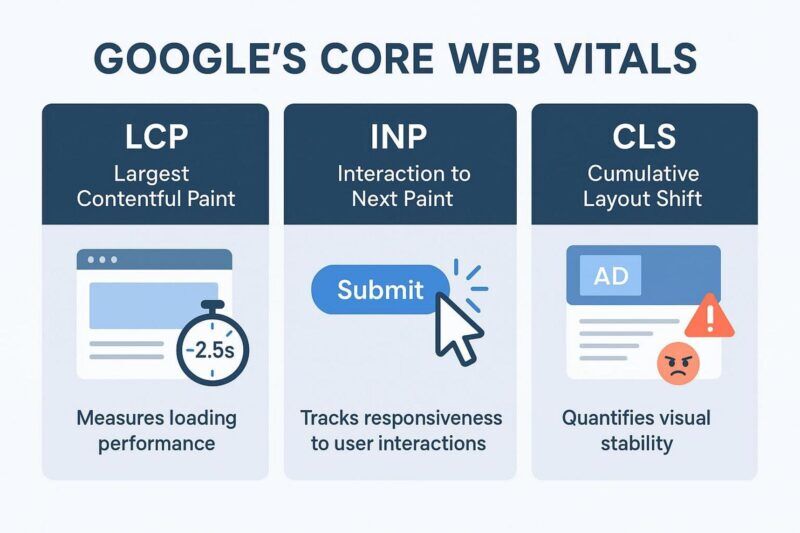
Core Web Vitals are Google metrics that measure real page experience and can affect rankings. For international SEO, they matter even more because internet speed, devices, and network quality can vary a lot by country. The main metrics are Largest Contentful Paint (LCP), Interaction to Next Paint (INP), and Cumulative Layout Shift (CLS).
- LCP measures how fast the main content becomes visible. Slow hosting, big images, or heavy themes can hurt LCP-especially for users on slower connections. If someone sees a blank screen too long, they may leave.
- INP measures how fast the page responds after a user interacts with it (like clicking a button). Too much JavaScript, heavy plugins, or messy code can make pages feel laggy and unreliable.
- CLS measures how much the page layout unexpectedly moves while loading. Late-loading images or ads can push text around, which feels frustrating-especially on mobile.
Better Core Web Vitals usually mean a smoother experience for users in many different regions and network situations.
Typical Performance Challenges With WordPress Sites
WordPress performance problems often come from several small issues adding up. Common causes include:
- Weak or poorly set up hosting that leads to slow server response, unstable speed, or downtime during traffic spikes from different time zones
- Too many plugins, or plugins that load extra scripts and database queries
- Heavy themes that include lots of features you don’t use, but still load on every page
- Unoptimized images and media, which often make up a large part of page size
- Database bloat from old revisions, temporary data, and leftover plugin data
When these issues stack together, the site can become slower over time, especially for visitors far from your server or on weaker networks.
Why International SEO Depends on Site Performance
International SEO focuses on setting up your site so people in different regions can find the right language and location version in search. That includes hreflang tags, local content, and the right site structure. But if your WordPress site is slow, search engines may crawl it less, index pages later, and rank it lower-even if everything else is set up correctly.
Faster Loading Times Improve User Experience Worldwide
People decide quickly whether a website feels trustworthy. If your page takes too long to load or becomes usable, many users will leave. This is even more common for international visitors using older devices or slower networks. A 1-second delay can reduce conversions by about 7% and increase bounce rate.
Faster pages help visitors:
- Read content without waiting
- Browse products and services smoothly
- Fill out forms without lag
- Move between pages with less friction
Speed helps build trust, especially when you’re trying to reach new markets.
Impact of Site Speed on Search Engine Rankings in Multiple Markets
Site speed is an SEO factor, and this applies across countries. Google uses Core Web Vitals as part of ranking systems. A slow site can lose positions even if the content is strong.
For businesses targeting multiple regions, it helps to keep performance strong across all language versions. If your site is regularly slow, Google may treat it as less helpful and rank it lower. That reduces visibility and traffic, even with good localization and hreflang setup.
Mobile Performance: A Key Factor for Diverse International Audiences
Mobile traffic is huge worldwide. In many countries, phones are the main (or only) way people use the internet. With mobile-first indexing, Google mainly uses the mobile version of your site for ranking.
If your mobile experience is poor, international users may leave quickly. Common problems include:
- Slow loading
- Images that are too large
- Hard-to-use menus
- Pop-ups that block content
- Buttons that are hard to tap or don’t respond well
Good mobile performance should be tested on real devices and real networks, not just desktop tools.
Crawl Efficiency and Indexation Issues for Multilingual Sites
Search engines use crawlers to find and process pages. On large multilingual WordPress sites, crawl efficiency matters a lot. If the site is slow or messy, Google may not reach all pages within its crawl budget. That can mean some local pages get indexed late-or not at all.
Common crawl problems include:
- Unneeded archive pages
- Poor URL structure
- Duplicate content without proper canonical tags or hreflang
- Parameter-based URLs that create many versions of the same page
- Slow server response
- Broken internal links
Speed and technical SEO work together. A faster, cleaner site makes it easier for search engines to find and understand every language version.
Factors Impacting WordPress Performance for International SEO
WordPress performance depends on many moving parts. For international sites, these parts matter even more because visitors come from different countries, devices, and network conditions. If you ignore one area, your site may feel fast in one region and slow in another.
Hosting Quality and Global CDN Considerations
Hosting is like the engine of your website. For international traffic, you need hosting that stays fast and stable for users far away.
TTFB (Time to First Byte) is a key measurement here. Google often suggests keeping it under 200ms. Good hosting should also aim for:
| Hosting feature | Why it matters |
| Fast server response (low TTFB) | Pages start loading sooner |
| High uptime (like 99.9%) | Less risk of lost traffic and crawl issues |
| Caching support | Reduces server load and speeds up delivery |
| Security features | Helps prevent hacks that can destroy SEO |
A CDN (Content Delivery Network) can also help a lot for global audiences. It stores copies of your content on servers in many regions, so users download files from a location closer to them. This lowers delay and often improves load times, especially for international visitors.
Theme and Plugin Choices Affecting Load Times
Your theme and plugins can make your site fast or slow. Many themes look great but load lots of extra code. Many plugins add scripts, styles, and database requests. One plugin might be fine, but many together can cause slow pages and conflicts.
A better approach is:
- Pick a lightweight theme that loads quickly and works well on mobile
- Use fewer plugins, and remove ones you don’t need
- Avoid using multiple tools that do the same job
Examples of lightweight themes often used for speed include GeneratePress, Astra, and OceanWP.
Image and Media Optimization for Faster Delivery
Images help content feel more useful and clear, but they can also slow pages down fast. Large images are often the biggest reason sites load slowly, especially on mobile.
Basic image steps include:
- Use good formats (JPEG for photos, WebP for smaller modern files, and PNG only when needed)
- Compress images (TinyPNG or ShortPixel can help)
- Resize images to the maximum size you actually display
- Use lazy loading so off-screen images load later
Also, clear file names and helpful alt text support image SEO and accessibility, which matters for users in all regions.
Database Optimization for Multilingual Content
As your site grows, the database can get slower. Multilingual plugins also add more data and can increase database load.
Over time, WordPress can collect:
- Old post revisions
- Temporary cached data (transients)
- Leftover data from removed plugins
Cleaning and optimizing the database on a schedule can speed up queries and improve page response, which helps both users and search engine crawlers.
Technical SEO Settings: hreflang, Permalinks, and Sitemaps
These items are not “speed metrics,” but they strongly affect international SEO results-and they work best on a fast, stable site.
Hreflang tags help search engines show the right language or country page. If those pages are slow or unavailable, hreflang helps less.
Permalinks should be clean and easy to read. A clear URL structure also helps multilingual targeting (using ccTLDs, subdomains, or subfolders).
XML sitemaps help Google discover and index pages. If the site is slow or has crawl errors, the sitemap won’t work as well.
Much of this can now be generated and monitored automatically, but the setup still needs someone who understands why each piece is there. As Radosław Paluszak from NON.agency puts it: “Go AI, but stay human. The hard part is preparing SEO and content teams to work with it effectively.” Automation catches the errors faster; it doesn’t decide which market structure or targeting logic was right in the first place.
How Poor WordPress Performance Can Undermine Link-Building Results
Link building helps SEO because links act like trust signals. For international SEO, links from respected sites in your target regions are especially valuable. But if your WordPress site performs badly, it can weaken your link-building results and waste your outreach work.
Website Speed as a Barrier to Earning High-Quality Backlinks
Say you publish a strong local guide or research piece. You contact bloggers or media sites to share it. If they open the page and it loads slowly, feels broken, or freezes on mobile, they may decide not to link to it. Many publishers don’t want to send their readers to a slow site because it makes their own site look worse too. So speed can block backlinks even when the content is worth linking to.
Negative Effects on Link Acquisition From Non-local Sources
International link building often includes outreach to global publications, industry sites, and large resource pages. These sites usually have higher quality standards. Poor Core Web Vitals and slow load times can make your brand look careless, which can lead to rejected pitches. That means your research time, outreach, and relationship building can fail because the first click experience is bad.
Bounce Rate and Its Influence on Link Value
Slow pages often lead to higher bounce rate (people leave after one page). Bounce rate is not a direct ranking factor, but it can still hurt SEO by showing that visitors don’t stick around.
If many users click a backlink to your site and leave right away, search engines may see that as a weak experience. That can reduce the impact of links over time. It also reduces the chance that visitors will explore more pages, share your content, or link to it later. Poor performance can create a cycle: slower pages lead to more bounces, which makes your site look less useful, which can make link building harder.
Best Practices to Improve WordPress Performance for International SEO and Link-Building
Improving WordPress performance for international SEO and link building takes several steps working together. The aim is simple: make a site that is fast, stable, and easy to use for people in many locations.
Selecting High-Performing Hosting and Content Delivery Networks
Better performance often starts with better hosting. Managed WordPress hosting can help because it often includes WordPress-focused server settings, caching, and scaling.
When choosing hosting, look for:
- Strong uptime (like 99.9%)
- Fast server response (low TTFB)
- Security features
- Support for caching and CDN use
For international sites, a CDN is close to a must. It serves content from a nearby server location, helping users in different countries load pages faster and more consistently.
Leveraging Caching, Minification, and Lazy Loading
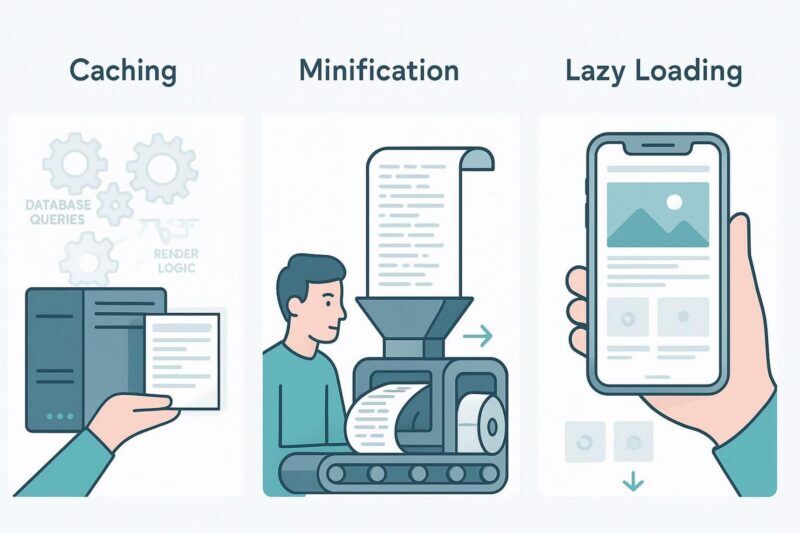
Three common speed methods for WordPress are:
- Caching: Serves saved versions of pages so WordPress doesn’t rebuild them every time. This can reduce server load and speed up page delivery. Plugins like WP Rocket or W3 Total Cache are common options.
- Minification: Shrinks CSS, JavaScript, and HTML files by removing extra spaces and comments. Plugins like Autoptimize can handle this.
- Lazy loading: Loads images and videos only when users scroll near them. This reduces initial load time, especially on long pages.
Managing Multilingual Plugins and Structured URL Architectures
Multilingual plugins are needed for many international sites, but they can add extra load. Pick one that works well with your setup and keep the site clean so it doesn’t add unnecessary database work.
For URL structure, common choices include:
- ccTLDs: yoursite.de (clear location targeting but more work to manage)
- Subdomains: de.yoursite.com (good separation, but authority may not flow the same way)
- Subfolders: yoursite.com/de/ (often easiest to manage and shares domain authority)
Keep URLs consistent, readable, and well-organized, and add hreflang tags correctly so search engines know which page to show in each region.
Regular Site Health Monitoring and Performance Audits
Performance and international SEO need regular checkups. Your site changes, plugins update, and search rules shift.
Useful tools include:
- Google PageSpeed Insights (speed and Core Web Vitals)
- GTmetrix and Pingdom (testing from different locations)
- Google Analytics (country/language behavior data)
- Google Search Console (crawl, index, and Core Web Vitals reports)
Review these reports often so you can find slow pages, mobile issues, crawl errors, and other problems before rankings and traffic drop.
Steps to Monitor and Maintain Global WordPress SEO Performance
Keeping WordPress fast for international SEO is ongoing work. User expectations change, and search engines update ranking systems often. Regular checks help you stay competitive.
Utilizing Global Site Speed Tools and Analytics
Test site speed from different countries to see what international visitors experience. Google PageSpeed Insights is a good start, and tools like GTmetrix or Pingdom can test from many regions.
Then use:
- Google Analytics to track bounce rate, time on site, and conversions by country and language
- Google Search Console to track crawl errors, indexing issues, and Core Web Vitals
This helps you spot which markets are doing well and which ones need technical work.
Ongoing Technical SEO Checks and Link-Building Assessments
International SEO needs regular technical checks, such as:
- Hreflang tag reviews
- XML sitemap checks for all language versions
- Redirect and broken link checks
- Duplicate content checks
Tools like Screaming Frog can help with deeper audits.
For link building, track new and lost backlinks with tools like Ahrefs or Semrush. Watch for harmful links too, and study what competitors are doing in each region. Also look for local link sources like regional blogs, business listings, and industry sites — what qualifies as an authoritative domain in Czechia rarely overlaps with what works in the US, which is why NON.agency plans link sources per market instead of reusing a single prospect list everywhere. A faster site makes outreach easier because it gives potential link partners a better first impression.
Adjusting Strategies as Search Engines Update Algorithms
Search engines change often. Google can shift the weight of performance signals and user experience metrics (like the move to INP). What worked last year might need updates now.
Regular reviews may include:
- Re-checking caching and minification settings
- Updating image formats and compression methods
- Improving mobile usability for key regions
- Testing different local content versions (like A/B tests)
Staying flexible helps you keep and grow visibility across countries.
Conclusion
If you want global growth with a WordPress site, performance is a basic requirement. Speed, stability, and mobile usability shape how people experience your site in every country, and they also affect how search engines crawl and rank your pages. Performance also impacts link building, because publishers and partners are less likely to link to slow or unreliable pages.
A smart approach is to build on a fast foundation: good hosting, a CDN, careful plugin use, optimized media, a clean database, and correct international SEO settings like hreflang and sitemaps. As user expectations rise and search engines keep focusing more on real page experience, improving WordPress performance will keep becoming more important for international SEO and long-term link growth.
