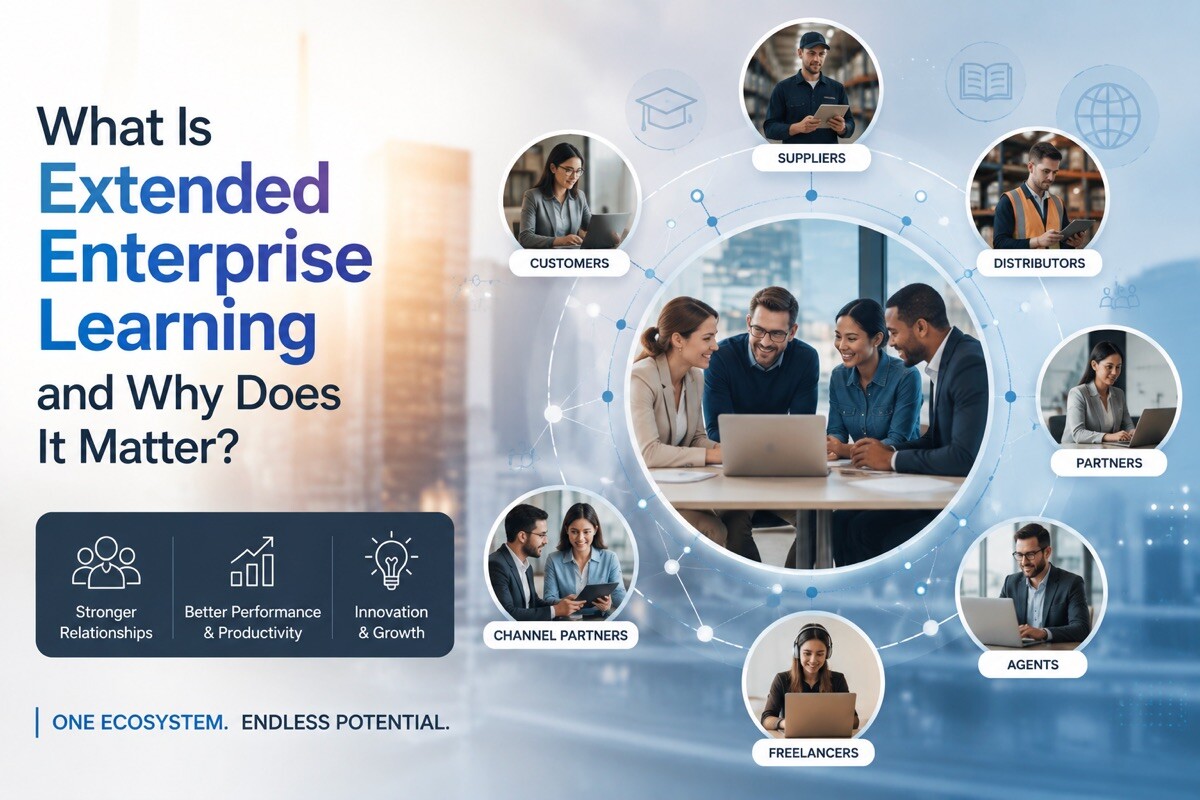
What Is Extended Enterprise Learning and Why Does It Matter?

Extended enterprise learning is training built for people outside a company whose actions still shape revenue, service quality, and customer trust. That audience may include resellers, distributors, suppliers, contractors, and end users. Gaps in their knowledge often show up as poor onboarding, inaccurate product claims, inconsistent support, or process failures. A well-run program gives those groups practical guidance before mistakes spread. For many organizations, external education has become a core part of steady growth and dependable execution.
Who It Serves
External education reaches every group that influences how a product gets sold, delivered, supported, or used. Many teams explore LMS extended enterprise approaches after seeing uneven messaging across partner networks, slow customer onboarding, or preventable service mistakes. Resellers need sharper product fluency. Clients benefit from guided adoption. Suppliers and contractors require clear process rules. Each audience learns for a different reason, yet all affect business results in visible, measurable ways.
The Main Business Case
The business case is straightforward. External groups represent a company long before an internal team can step in. A reseller with clear product knowledge closes gaps in buyer expectations. A trained customer reaches value sooner and needs less rescue. A supplier who follows exact specifications creates fewer delays. Each gain lowers friction. Over time, shared instruction supports steadier performance across regions, markets, and service channels without adding constant manual supervision.
Better Product Knowledge
Product confusion creates avoidable losses. Buyers hear mixed claims, partners miss key details, and users apply features in the wrong setting. Strong external learning corrects that early. Short lessons, examples from daily work, and simple checks help people remember what matters. Clear education also improves consistency across every channel. When resellers, customers, and service partners rely on the same source, fewer errors are spread through sales calls, onboarding sessions, or support exchanges.
Stronger Customer Outcomes
Customer education directly affects adoption. People who know how a product works reach useful results faster and make fewer preventable mistakes. Thoughtful training reduces uncertainty during setup and gives users confidence during early use. That changes the support pattern. Fewer basic questions reach service teams, while more advanced conversations become possible. Better early guidance can also improve feature uptake, satisfaction, renewal rates, and long-term account health.
More Effective Partner Channels
Partner channels perform better when training goes beyond static sales material. Resellers need to know the buyer’s problem, the right fit, common objections, and the offer’s limits. Distributors may need guidance on packaging, pricing, or fulfillment rules. Service firms require clear operating steps. Timely updates keep every group aligned as products change. That reduces confusion during handoffs and helps each partner represent the business more accurately.
Lower Risk And Fewer Errors
Risk rises when external groups act on partial information. A contractor may skip a required step. A supplier may fail to meet a quality standard. A partner may promise unsupported functionality. Training reduces those failures by setting expectations early and documenting what was shared. That record matters in regulated sectors and technical industries. Clear instructions also protect customer trust because fewer mistakes reach the point of becoming complaints, returns, or compliance issues.
Data Makes It Useful
Training becomes far more valuable when results are measured against business performance. Completion rates can signal reach, yet they say little about behavior. Better indicators include product adoption, support volume, onboarding time, renewal trends, and partner sales accuracy. Those measures show whether learning changed what people actually do. Data also highlights weak content. If learners stop midway or miss critical checks, the material likely needs clearer structure, better examples, or simpler sequencing.
Common Delivery Methods
Most organizations use a mix of formats rather than one long course. Self-paced modules work well for product basics and process steps. Live sessions help with questions, demonstrations, and policy updates. Knowledge checks confirm recall, while short reference guides support daily work after formal lessons end. Segmentation is essential. Customers, distributors, and contractors should not all receive the same path. Relevance keeps attention high and reduces unnecessary cognitive load.
Common Mistakes To Avoid
Many programs fail because teams publish content and expect improvement without follow-through. Another common problem is recycling internal staff courses for outside audiences with very different needs. External learners usually need faster answers and less background detail. Outdated material creates a separate risk. Once product terms, policies, or workflows change, stale lessons quickly lose value.
How To Start Well
A small pilot is usually the best starting point. One audience, one business goal, and one clear metric create a manageable scope. A company might train resellers on positioning or help customers complete setup without support. From there, teams can gather feedback, review performance data, and refine content before expanding.
Conclusion
Extended enterprise learning matters because external audiences shape customer experience and operating performance every day. Their decisions affect sales quality, onboarding speed, support demand, compliance exposure, and product adoption. When companies train those groups with discipline, they create clearer expectations across every shared touchpoint.