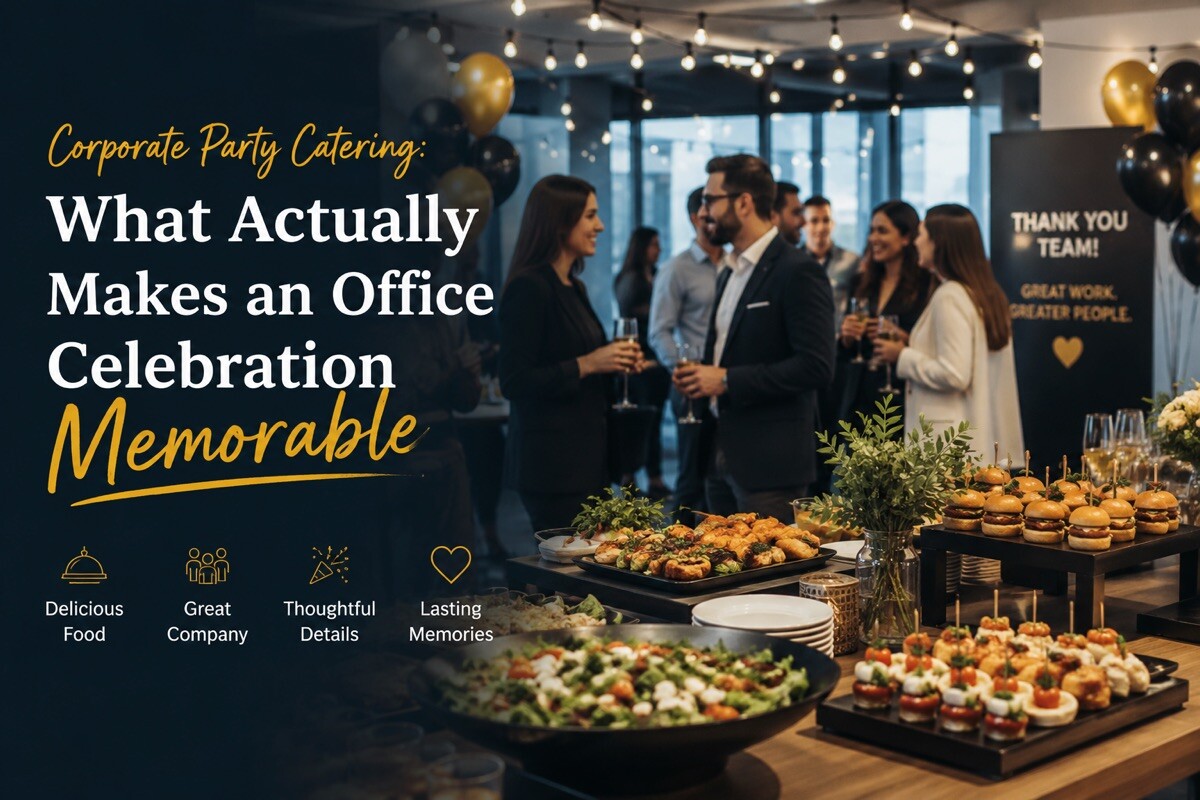
Corporate Party Catering: What Actually Makes an Office Celebration Memorable

Corporate party catering gets judged by a different standard than almost any other business event. A client dinner or a conference lunch is measured against professionalism and efficiency. A company party is measured against whether people actually had a good time, which is a much harder thing to guarantee and a much easier thing to get wrong. Good food alone does not make a party memorable, but bad food or a poorly run buffet line can absolutely sink one.
Reading the Room Before Building the Menu
The biggest planning mistake with corporate parties is applying a one-size-fits-all menu regardless of the occasion. A holiday party calls for a different feel than a product launch celebration, and a milestone anniversary party for a fifty-person company should not look like a scaled-down version of a five hundred-person all-hands celebration.
Understanding the actual culture of the company, whether that is a formal finance firm or a casual creative agency, should shape everything from format to menu style before a single dish gets chosen.
Food stations tend to outperform a single buffet line for most corporate parties, since stations naturally spread people around a room and encourage mingling rather than funneling everyone through one bottleneck. A raw bar station, a carving station, and a dessert station operating simultaneously keep energy moving through a room in a way a single long buffet table rarely does, and they give guests a reason to walk around and talk to different colleagues over the course of the event.
Balancing Approachable Food With a Few Standout Moments
Corporate parties benefit from food that is easy to eat while standing and holding a drink, which rules out most dishes requiring a knife and a stable surface. Passed hors d’oeuvres and station-based small plates tend to work better than a seated dinner for most office celebrations, since they match the social, mingling energy that a good corporate party is going for.
At the same time, one or two standout dishes or an eye-catching dessert display give a party a moment people remember and photograph, which matters more for company culture than it might seem. Employees posting a genuinely impressive dessert table to their own social accounts is free, authentic marketing for a company’s culture that no amount of formal internal messaging can replicate.
Drinks Matter as Much as Food
An open bar or a curated cocktail menu often shapes the energy of a corporate party more than the food does, and pairing the two thoughtfully makes a real difference. A signature cocktail built around the company’s branding or a milestone being celebrated adds a personal touch at very little extra cost, while a food menu with heartier options helps keep a long open bar evening from getting out of hand.
Timing the Event So the Food Supports the Program
Most corporate parties still include some structure, whether that is a short speech from leadership, an awards moment, or a video recap of the year. Catering needs to work around that structure rather than against it, with food service paused or slowed during any formal moments so the room’s attention is not split between a speech and a server clearing plates.
Experienced catering teams coordinate this timing directly with whoever is running the event, treating the food as something that supports the program rather than competing with it.
Planning for the Realities of an Office Venue
A meaningful share of corporate parties happen in the office itself rather than an outside venue, which brings its own catering challenges. Limited kitchen access, elevator restrictions, and shared building spaces all affect what a caterer can realistically execute on site.
A catering team experienced with in-office events plans around those constraints from the start, choosing a menu and service style that can be executed well within the venue’s actual limitations rather than proposing something that looks great on paper but falls apart logistically on the day of the event.
Noise and space also deserve more thought than they usually get. An office floor plan built for quiet, focused work rarely has natural flow for a hundred people mingling with drinks in hand, so a caterer who has worked in similar spaces before can help identify where stations should go to avoid bottlenecks near desks, doorways, or the only working elevator bank.
Choosing a Caterer Who Understands Company Culture
The best corporate party caterers ask questions that go beyond headcount and budget, wanting to understand what the party is actually celebrating and what tone the company is going for. Corporate party catering that succeeds tends to come from a caterer willing to have that conversation upfront rather than delivering a generic package regardless of the occasion.
A party that reflects an actual understanding of the company and its people almost always lands better than one built from a standard template, and that difference is usually what employees end up talking about long after the event itself is over.